While it’s impossible to see all of the Dolomites on a single trip, it is possible to experience the best that this region has to offer. From savoring the local cuisine and staying in Dolomites spa hotels to hut to hut hiking and via ferrata climbing, the Dolomites offers adventure, relaxation, delicious Alpine-Med cuisine, and the best mountain vistas on this planet.
Here are my personal and practical recommendations for what to see and do in the Dolomites, based on nearly a decade of exploring.
- Where are the Dolomites: The Dolomites are located in Northern Italy and span across the provinces of South Tyrol, Trentino, Belluno, Udine, and Pordenone.
- When to Visit the Dolomites: Best Time to Visit the Dolomites
- Languages Spoken in the Dolomites: Ladin, German, and Italian
- Where to Stay in the Dolomites in Summer: Best Places to Stay in Dolomites in Summer
- Where to Stay in the Dolomites in Winter: Alta Badia Ski Resort, 3 Zinnen Ski Resort, Val Gardena Ski Resort
- Closest Airports to the Dolomites: Bolzano Airport in Bolzano (Bozen) and Marco Polo International Airport in Venice
- Dolomites Road Trips: 5-Day Dolomites Itinerary, 7-Day Dolomites Itinerary, and 10-14 Day Dolomites Itinerary
- Car-Free Travel: Visiting the Dolomites without a Car
Dolomites Map
How to use this map | Click directly on the map markers to find out more information about specific destinations, hiking trails, lakes, mountain huts, peaks, accommodations, and more. Each color signifies a different Dolomites region.
DOLOMITES REGIONS
Val di Fassa
Val d’Ega
1. Ski in Dolomiti Superski


Skiing is an extraordinary way to experience the cinematic scenery, unique Austrian-Ladin-Italian culture, and world-class hospitality of the Dolomites.
Dolomiti Superski is a network of 12 ski resorts across the Dolomites. When combined, the ski area boasts 1200 km of ski slopes. See my Dolomites ski guide for an overview of the best resorts.

I loved skiing in Val Gardena, because of the upbeat atmosphere, staggering views, intermediate terrain, and ski connections to Alta Badia ski resort, Val di Fassa ski resort, and Arabba Marmolada ski resort. In fact, you can ski across all four resorts in a single day by following the Sella Ronda ski circuit.
In South Tyrol, expect fast high-quality lifts, powerful snowmaking capabilities, excellent ski hotels, and well-groomed intermediate pistes. I loved skiing 3 Zinnen Dolomites resort in Sexten and Carezza Ski Resort in Val d’Ega (Eggental).
Though the infrastructure is aging and the resort is fragmented, Cortina d’Ampezzo Ski Resort is absolutely worth the hype. Dedicate at least one day to each area (Tofane, Cinque Torri, and Faloria) and also ski the Hidden Valley Run from Lagazuoi to Armentarola.

Non-skiers can still take advantage of ski lifts to access incredible huts and prepared hiking paths. Read Dolomites in Winter for ideas on what to see and do in December, January, February, and March.
2. Go on a Road Trip
It’s absolutely possible to visit the Dolomites without a car. However, renting a car will give you added flexibility, especially if visiting during shoulder seasons (early June, late September, October, and even early November). With a car, you don’t have to plan your hikes around seasonal transit, or stay in the most central locations.
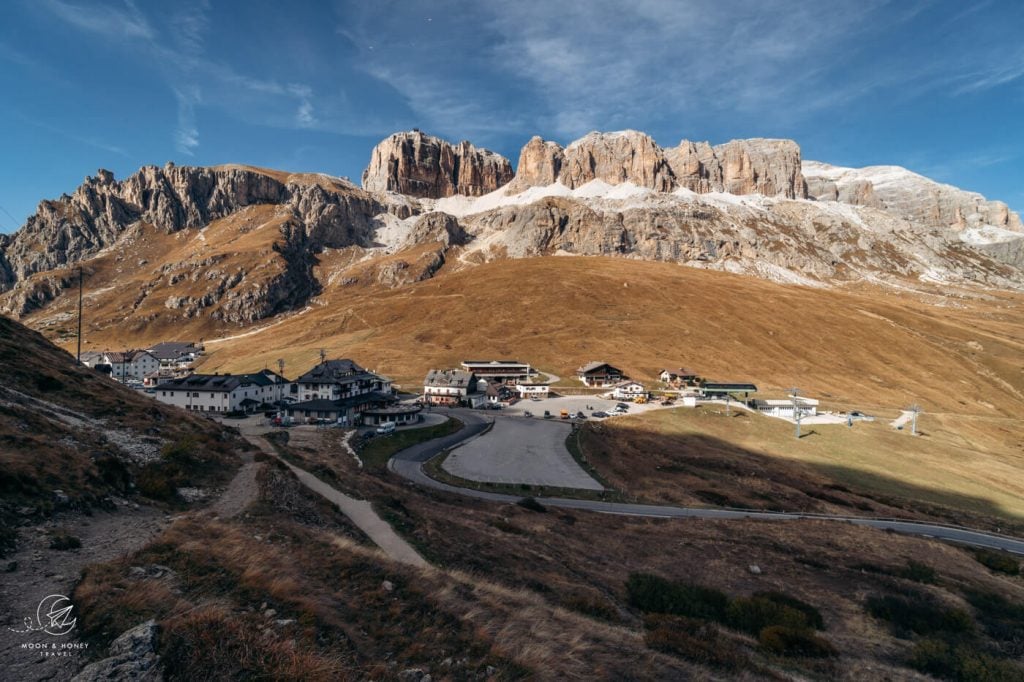
A highlight of any Dolomites road trip is driving over the high mountain passes, which link various valleys throughout the Dolomites. These passes double as popular hiking trailheads, so I recommend building in time to fully appreciate the beauty that each pass has to offer.
Dolomites Mountain Passes
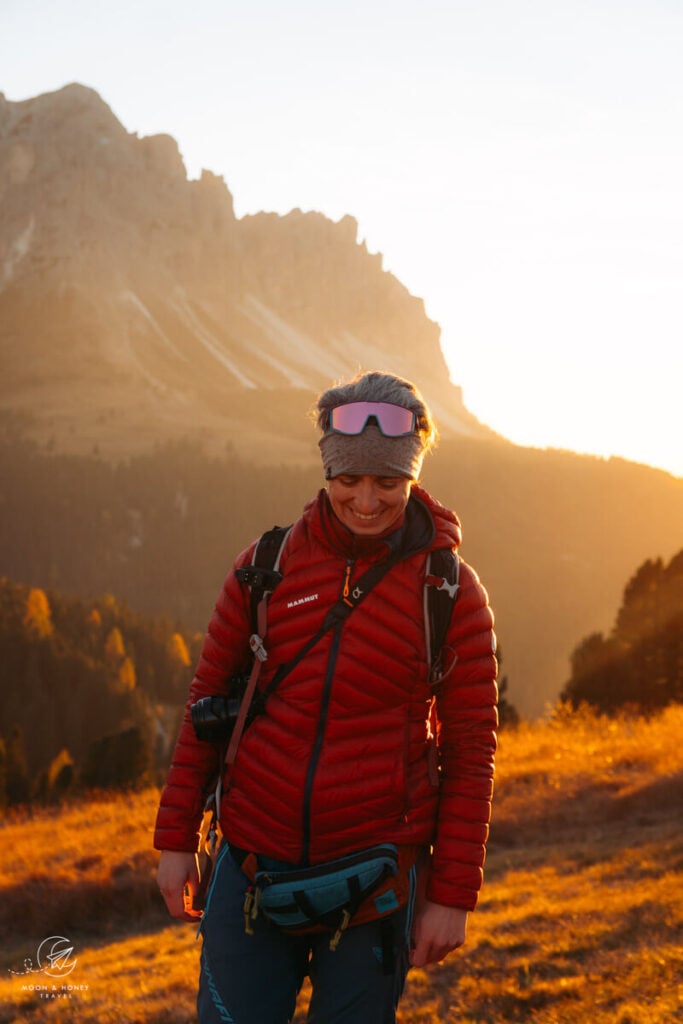
The first time we drove through the Dolomites, we briefly stopped at the various mountain passes to see the views. I remember seeing hikers at every pass and wondering desperately where they were all going.
Luckily, you don’t have to wonder. Below, I’ve summarized what you can do from each mountain pass.
Passo Gardena, Grödnerjoch, Ju de Frara (2136 m) | This is the mountain pass that connects Val Badia with Val Gardena in South Tyrol. From Gardena Pass, you can hike to Cima Pisciadu in the Sella Group. You can also climb to the summit of Gran Cir and Sass da Ciampac in the Cir Group.
Passo Rolle (1989 m) | Passo Rolle connects the Fiemme and Primiero valleys, high above San Martino di Castrozza, Trentino. From Passo Rolle, we loved hiking to Baita Segantini, an alpine pasture hut with mind-blowing views of the northern face of Pale di San Martino. This trail can be extended to Val Venegia.
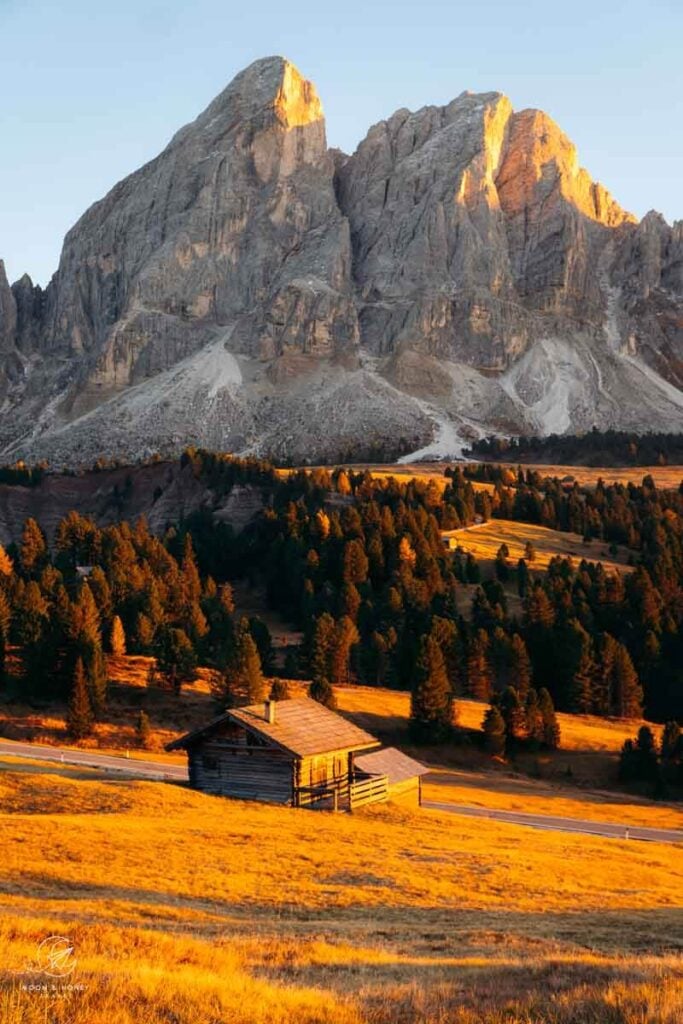
Passo delle Erbe, Würzjoch, Ju de Börz (2006 m) | Passo delle Erbe is located high above Val Badia and Val di Funes. The lovely mountain refuge Ütia de Börz is situated directly at the pass, directly across the mighty two-headed Sass de Putia/Peitlerkofel mountain. The circuit trail around Sass de Putia is a wonderful moderate hike starting at the pass. It’s also possible to extend the circuit to the summit of Sass de Putia. The final stretch is secured with cables.
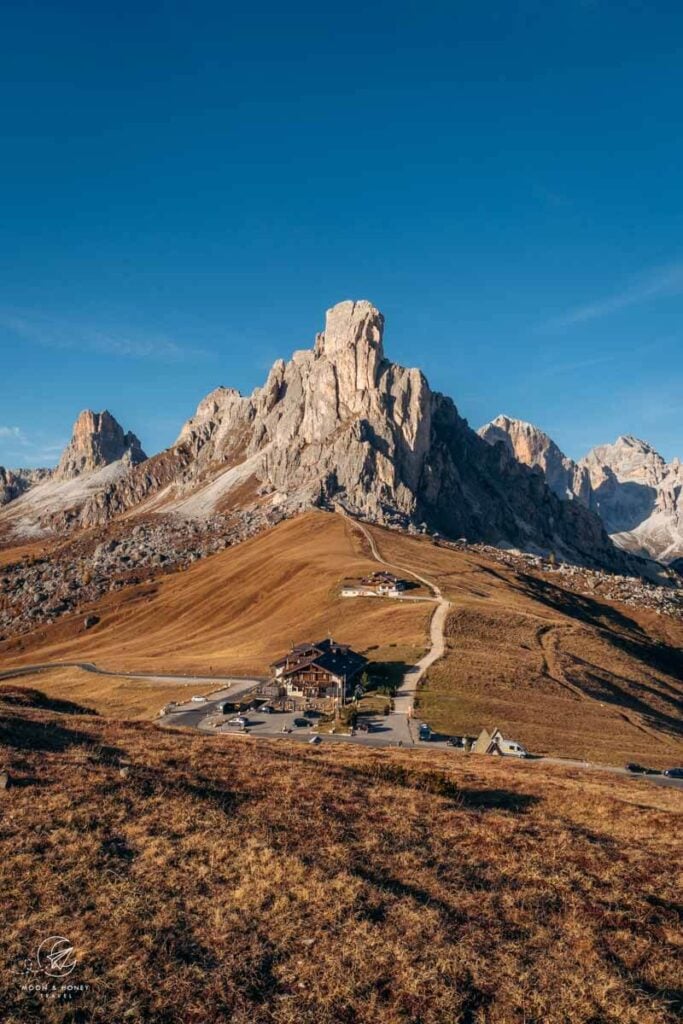
Passo di Giau, Jou de Giau (2236 m) | Passo Giau is located in the province of Belluno between Cortina d’Ampezzo and Selva di Cadore. It delivers a striking view of Ra Gusela in the Averau-Nuvolau Group. From the pass, you can hike to the Mondeval Plateau Pasture and Lago delle Baste.
Passo Falzarego, Falzaregopass, Jou de Fauzare (2105 m) | Falzarego Pass is high mountain pass in Belluno which connects the Ampezzo Valley with Val Badia. The main attraction is the Lagazuoi Cable Car, which links the pass to Rifugio Lagazuoi and the start of the Lagazuoi Tunnels protected path.
Passo Sella, Sellajoch (2218 m) | Set between the massive Sella Group and the Sassolungo/Langkofel Group, Sella Pass connects Val Gardena in South Tyrol with Val di Fassa in Trentino. Hikers venture here to start the circuit trail around Sassolungo. From Passo Sella, you can ride the 2-person gondola to Rifugio Toni Demetz Hütte (2685 m) located on the Forcella del Sassolungo/Langkofelscharte saddle. From here, you can hike down to Rifugio Vicenza/Langkofelhütte. Keen via ferrata climbers can tackle the Oskar Schuster Klettersteig to the summit of Sasso Piatto/Plattkofel.
Passo Pordoi (2239 m) | Passo Pordoi is located between the Sella Group and the Marmolada Group. The pass connects Canazei in Val di Fassa with Arabba in Livinallongo del Col di Lana. Like Passo Sella, Passo Pordoi lies on the Great Dolomites Road. We recommend stopping here to hike the historic Viel del Pan hiking trail to Rifugio Viel dal Pan.
Road Trip Routes
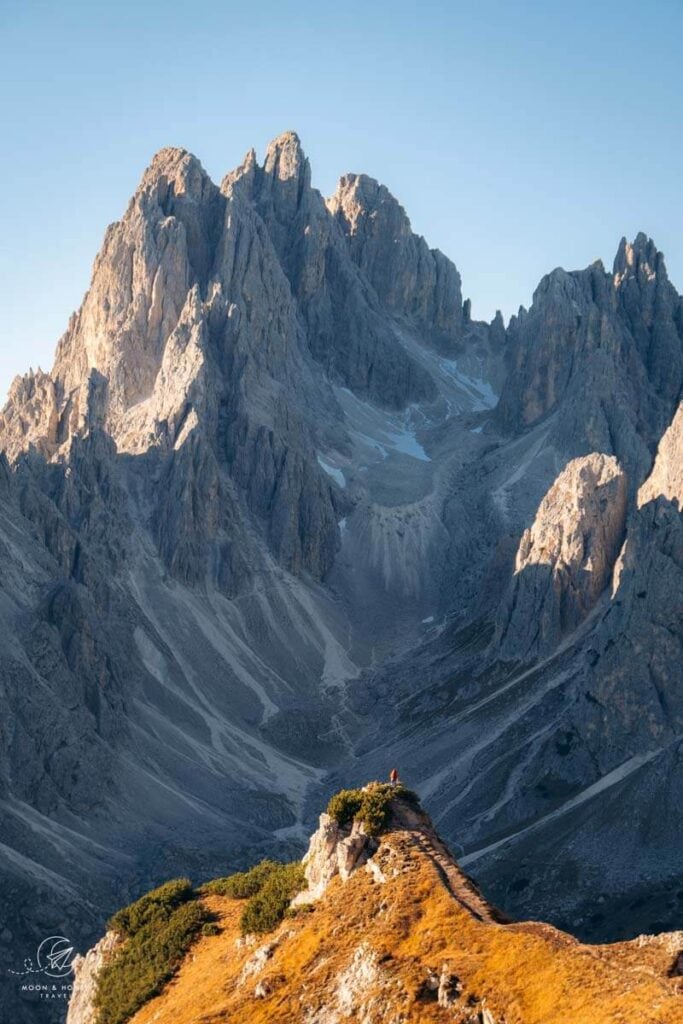
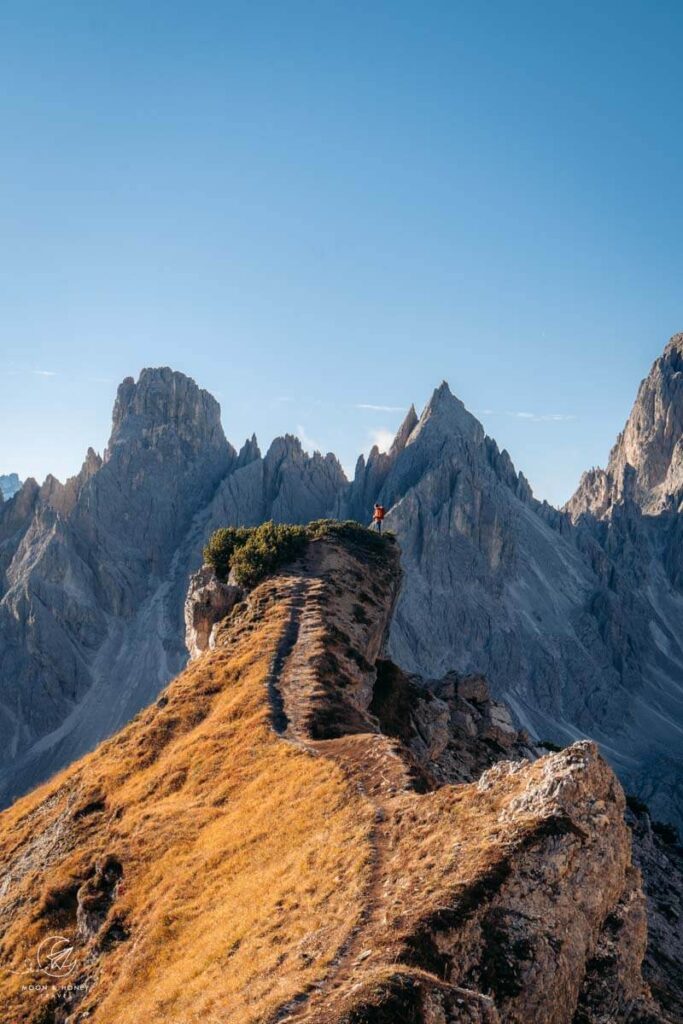
During our first trip to the Dolomites, we stayed no more than one night in each location. It was way too rushed. And, it was completely unnecessary to change accommodations so frequently. We highly recommend spending a minimum of 2-5 nights in each Dolomites destination.
Read Where to Stay in the Dolomites in Summer for an overview of the best bases in the Dolomites, including Val Gardena, Alta Badia, Cortina d’Ampezzo, San Martino di Castrozza, Alta Pusteria, and Val di Funes.
It’s entirely feasible to plan a 1-week trip to a single destination (for example, see my Val Gardena summer itinerary). If you don’t like moving around and you’d rather deeply explore one area, you absolutely can.
Start planning your road trip itinerary with these routes:
- 5-Day Dolomites Itinerary
- 7-Day Dolomites Itinerary
- 10-14 Day Dolomites Itinerary
- Munich to the Dolomites
3. Climb a Via Ferrata Route

A via ferrata (“iron path”) is a protected climbing route. These routes are secured with fixed cables, pegs, rungs, and ladders, allowing climbers to safely ascend and descend tricky passages. Climbing Via Ferratas (vie ferrate) is a popular pastime in the Italian Dolomites and an exciting alternative to hiking.
We love via ferratas because these routes engage your whole body. You’ll be using your hands and arms, just as much as your legs and feet, to traverse mountain faces.
While climbing via ferratas is a recreational activity today, the origins of these routes are far more somber. In the First World War, the Dolomites were a war zone. For years, the Italian and Austro-Hungarian troops battled against each other in these mountains. Both sides strived to gain control of mountain summits to establish site observation posts and field guns.
Permanent lines and ladders were affixed to rock faces to help troops move quickly and safely at high altitudes. Thus began the tradition of via ferrata climbing as we know it.
Via Ferrata routes vary in difficulty. Using the Schall grading scale, via ferratas are classified by letter:
- A: Easy
- B: Moderately Difficult
- C: Difficult
- D: Very Difficult
- F: Extremely Difficult
A good beginner’s via ferrata is the Gran Cir summit in Puez-Odle Nature Park (accessible from Passo Gardena) and the Santner Via Ferrata to the Vajolet Towers. We hiked the latter route on Stage 1 of our 3-Day Rosengarten Dolomites Trek.
For an intermediate via ferrata (Grade B/C), check out the Oskar Schuster klettersteig and the Sass Rigais Klettersteig.
There are over 200 via ferrata routes in the Italian Dolomites. We recommend using a guidebook like Via Ferratas of the Italian Dolomites: Vol 1 to learn more about specific routes.
In addition to via ferrata routes, there are also a number of Sentiero Attrezzato trails. These “equipped paths” are secured with steel cables and other aids, but are usually less technical than a via ferrata.
The Sentiero Bonacossa across the Cadini di Misurina range is one such Sentiero Attrezzato. The hike to Piz Duleda also entails scrambling up a short sentiero attrezzato.
Via Ferrata Equipment

With the exception of “very easy” via ferrata routes, it’s necessary to have a via ferrata set, which includes a climbing helmet, a climbing harness, and a via ferrata lanyard with carabiners. I highly recommend this unisex CAMP Kinetic Gyro Rewind Pro lanyard. In addition, climbing gloves like these Black Diamond Crag Half-Finger Gloves are very helpful with grip.
For women, we recommend this Women’s Black Diamond Half Dome Helmet and this Momentum Harness. For men, we recommend this Men’s Black Diamond Half Dome Climbing Helmet and Mens Momentum Rock Climbing Harness.
4. Hike Hut to Hut

Hiking hut to hut in the Dolomites has the potential to ruin you for hiking anywhere else. It’s sinfully luxurious. After a day of hiking, you can take a shower (in most huts), drink a glass of wine, and eat a multi-course meal. From espresso to mountaintop saunas, Rifugios in the Dolomites will delight and pamper you.
You can follow established routes, or create your own hut-to-hut hiking itinerary, which is what we did when we wanted to hike a few days in the Sexten Dolomites (see Tre Cime di Lavaredo 3 Day Trek) and the Rosengarten Dolomites (see Rosengarten Dolomites 3 Day Trek).
Here are some tips for planning a hut-to-hut hiking trip in the Dolomites:
1. Make reservations for mountain huts (Rifugios) 6-9 months in advance. Depending on the popularity of the route, you may need to pay a deposit to secure your reservation. All huts must be booked individually.
2. Rifugios are open from late June until late September. We recommend hiking hut-to-hut in July, August, or early September.
3. Communicate your diet restrictions to the Rifugios in advance.
Hut to Hut Hiking Routes

The most popular hut-to-hut hiking routes in the Dolomites are the alte vie high routes. The easiest and the most popular alta via route is the Alta Via 1, which starts in Lago di Braies (Pragser Wildsee) and ends in La Pissa, near Belluno. Given the popularity of this route, it’s important to book this trek 9-12 months in advance.
Read how to book the Alta Via 1 trail for an overview of the best options. If you want to go down the self-guided route (the most hassle-free option), check out Alpenventures Unguided’s 10-Day Alta Via 1 self-guide trip (shorter and longer itineraries available).
Beyond the Alta Via 1, they offer the Alta Via 8, Alta Via 2 Hiker’s Route, and this exciting Best of the Dolomites Trek, which links Seceda with Tre Cime di Lavaredo.
Learn More: Self-Guided Hiking Trips in the Dolomites
5. Stay the Night in a Rifugio

If hiking hut-to-hut seems a bit too long, or outside of your comfort zone, you can still overnight in a Rifugio (Hütte in German-speaking South Tyrol), without going on a lengthy multi-day hiking trip.
The first mountain hut Kati and I ever stayed in was Tierser Alpl in the Rosengarten Dolomites. We did a simple 2-day hike, out-and-back. Staying one night in a Rifugio was an excellent introduction to overnight hiking and gave us the confidence to pursue longer hut-to-hut treks in the future.
Wonderful Rifugios to Stay in
Rifugio Alpe di Tires / Tierser Alpl
Location | Sciliar – Catinaccio Natural Park / Naturpark Schlern – Rosengarten, South Tyrol
Why Stay Here | Delicious South Tyrolean food, alpine modern design, and exquisite management.
How to Get Here | You can hike to Tierser Alpl from Compaccio/Compatsch, the largest settlement on Alpe di Siusi/Seiser Alm.
Learn More | Hiking to Tierserl Alpl Schutzhaus in the Rosengarten Dolomites (direct route) or the scenic Compaccio – Rifugio Bolzano – Tierser Alpl circular route.
Rifugio Pian di Cengia / Büllelejochhütte
Location | Parco Naturale Tre Cime / Naturpark Drei Zinnen / Three Peaks Nature Park, South Tyrol
Why Stay Here | Büllelejochhütte is the smallest and highest mountain hut in the Sesto/Sexten Dolomites. This memorable mountain hut enchants you with its cozy, intimate interior, friendly staff, and delicious half-board menu.
How to Get Here | You can hike here from Val Fiscalina/Fischleintal in Sesto/Sexten via Rifugio Comici (4 hours). You can also hike here from Rifugio Auronzo, accessible by car/bus, in 3 hours.
Learn More | Tre Cime di Lavaredo 3-Day Trek
Rifugio Fanes / Fanes Hütte
Location | Fanes-Sennes-Braies Nature Park / Fanes-Sennes-Prags Nature Park, South Tyrol
Why Stay Here | Fanes Hütte is a stately mountain hut that pampers guests with its food, extensive wine list, beautiful bedrooms, and hot showers. Well-seasoned hut-to-hut hikers may think this hut is too much like a hotel.
How to Get Here | This luxurious mountain hut is located along the Alta Via 1 Route, but you can also here from Capanna Alpina, in San Cassiano in Alta Badia.
Learn More | Rifugio Fanes Day Hike
6. Savor Traditional Italian, Tyrolean, and Ladin Cuisine

Like other destinations in the Alps, the outdoors and gastronomy are intrinsically linked. Hiking (or skiing, snowshoeing, sledding, walking, etc…) without dining in a mountainside hut would be like going to a baseball stadium and not eating a hot dog and garlic fries. It would be unthinkable.
Contrary to what most believe, the food in the Dolomites isn’t homogenous. As you explore the many regions of the Dolomites, you’ll encounter Italian, Tyrolean (Austrian), and Ladin cuisine.
What to Eat
Brettljause. A snack board with Speck (dried ham), sausage, cheese, bread, and butter.
Knödel. Large breadcrumb dumplings made with either Speck (ham), Käse (cheese), or Spinat (spinach). Knödel is often served in a soup, or as a side dish. You can also order the Knödel-Trilogie (Tris di Canederli in Italian), which is three dumplings (ham, spinach, cheese), garnished with butter and parmesan.
Schlutzkrapfen (Mezzelune in Italian). Half-moon-shaped stuffed pasta, similar to ravioli. Traditionally, Schlutzkrapfen is filled with curd cheese and spinach. Our favorite type is stuffed with Eierschwammerl (chanterelle mushrooms).
Südtiroler Naturjoghurt mit Preiselbeeren. Natural Yogurt with cranberries.
Polenta. Boiled cornmeal. Polenta is commonly served with mushrooms, meaty stews, sausages, and fried cheese.
Where to Eat
For traditional cooking, we recommend eating in mountain huts and alpine pasture huts. For fine dining and innovative cooking, we recommend eating in 4-star/5-star hotels. Did you know that the Dolomites boasts the highest concentration of Michelin-starred chefs in Italy?
Hotel Restaurants

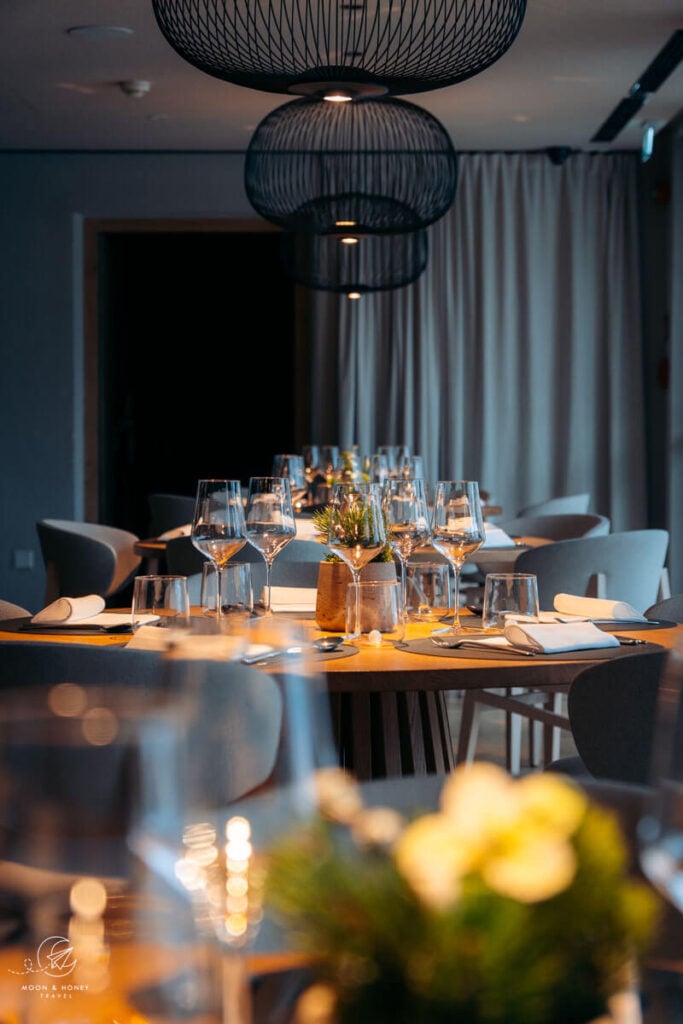
La Stüa de Michil is a 1 star Michelin restaurant in Hotel La Perla in Corvara, Alta Badia
Dorfhotel Beludei is a boutique hotel in Santa Cristina, Val Gardena. You have to stay here to eat here. Chef de cuisine Dominic Pernstich concocts the most visionary meals inspired by the Ladin and Italian culinary traditions. Read our Dorfhotel Beludei hotel review.
Locanda degli Artisti Art Hotel is a boutique hotel in Canazei, Val di Fassa, with an on-site restaurant. This friendly and atmospheric art-themed hotel serves innovative Ladin cuisine. Read our Locanda degli Artisti Art Hotel Review.
Hotel de Len is a stellar 4-star hotel in the town center of Cortina d’Ampezzo. Their à la carte restaurant showcases the flavors of the Ampezzo Valley. Read our Hotel de Len Review.
AMA Stay is a 4-star design hotel in San Vigilio in the Kronplatz holiday resort with an excellent a la carte restaurant. Read our Ama Stay Review.
Mountain Huts (Rifugio, Hütte, Schutzhaus)
Ütia de Börz is a mountain refuge/guesthouse at Passo delle Erbe, Alta Badia, specializing in Ladin and South Tyrolean Food. We stayed here three nights and were blown away by their half-board menu. Book your stay at Ütia de Börz.
Rifugio Alpe di Tires/Tierser Alpl Hütte is a South Tyrolean mountain hut between the Sciliar/Schlern Group and the Rosengarten/Catinaccio Group. The food is outstanding. You can hike here from Alpe di Siusi in 2:30-3:00 hours. However, we suggest venturing to this lovely refuge via Rifugio Bolzano and the Sciliar plateau.
Alpine Pasture Huts (Alm, Baita, Malga, Ütia)
Ütia de Göma is situated on the Sass de Putia circuit trail. Their “Polenta mit geschmolzenem Käse, Pilzen und Bratwurst” (Polenta with melted cheese, mushrooms, and sausage) was bursting with flavor.
7. Experience Enrosadira

Enrosadira comes from the Ladin term “rosadüra,” which means turning pink. This term refers to the natural phenomenon that occurs at sunrise and sunset when the peaks of the Dolomites light up in fiery shades of peach, rose, crimson, and violet.
Geologists assert that the magnesium-rich calcium carbonate minerals, found in dolomite rock, are responsible for this spectacular alpenglow.
The best time to see Enrosadira is in September and October when the skies are clear and the weather is generally stable. However, you can witness the phenomenon any time of year.
Sunset Locations
Baita Segantini is a lakeside mountain hut facing the Pale di San Martino peaks in Trentino. You can hike to this hut from Passo Rolle in 45 minutes.
Monte Pic is the mountain above Santa Cristina and Ortisei in Val Gardena, South Tyrol. The Monte Pic summit affords panoramic views of the Odle/Geiser Group, Sella Group, Sassolungo/Langkofel, and Catinaccio/Rosengarten Mountains.
Val di Funes is the valley stretching from Valle Isarco/Eisacktal Valley to the Odle/Geisler mountain range. We recommend watching the sunset along the Santa Maddalena Panorama Trail.
The Cadini di Misurina Viewpoint is located along the Sentiero Bonacossa Trail in the Sesto/Sexten Dolomites. From this epic lookout, you can see both the Northern Cadini di Misurina mountains and the south wall of Tre Cime di Lavaredo light up in fiery tones of orange and crimson.
Monte Specie/Strudelkopf is a easy-to-reach summit in the Braies/Prags Dolomites. The hike to Monte Specie starts atop the Prato Piazza plateau.
Hotel Rodella. When we stayed at Hotel Rodella, above Selva in Val Gardena, we didn’t have to hike anywhere in order to experience the Sella Group suffused in hues of rose and salmon.
Hotel Ciasa Soleil in La Villa, Alta Badia. From the dining room and the outdoor hot tub, you can see the Fanes Group fire up like a ship on fire.
Naturhotel Leitlhof in San Candido, Alta Pusteria (Three Peaks Region). There are heart-expanding sunrise and sunset views of the Sesto/Sexten Peaks from the dining room, outdoor terrace, outdoor pool, and bedroom balconies. Read our Naturhotel Leitlhof hotel review.
Sunrise Locations

Alpe di Siusi/Seiser Alm is a largest alpine pasture in Europe. At sunrise, the Sciliar/Schlern massif lights up in shades of coral and red, while the Sassolungo/Langkofel group transforms into a violet silhouette. Given the location and driving restrictions on Alpe di Siusi, it’s best to stay directly on the plateau at Sporthotel Sonne. Follow this Alpe di Siusi Meadows Circuit Trail.
Val Fiscalina/Fischleintal is a side valley of Sesto/Sexten Valley in the Sesto/Sexten Dolomites. We recommend going on a sunrise walk between Bad Moos and Hotel Dolomitenhof.
Gran Cir is a summit in the Cir Group in Puez-Odle Nature Park. It takes about 1:30 hours to hike to the peak from Passo Gardena, the mountain pass connecting Val Gardena and Val Badia.
Lago Federa is a mountain lake beneath the eastern wall of Croda da Lago in the Ampezzo Dolomites, southwest of Cortina d’Ampezzo.
Lago di Braies/Pragser Wildsee in Valle di Braies/Pragser Tal valley in Fanes-Sennes-Braies Nature Park.
8. Eat Lunch in a Malga
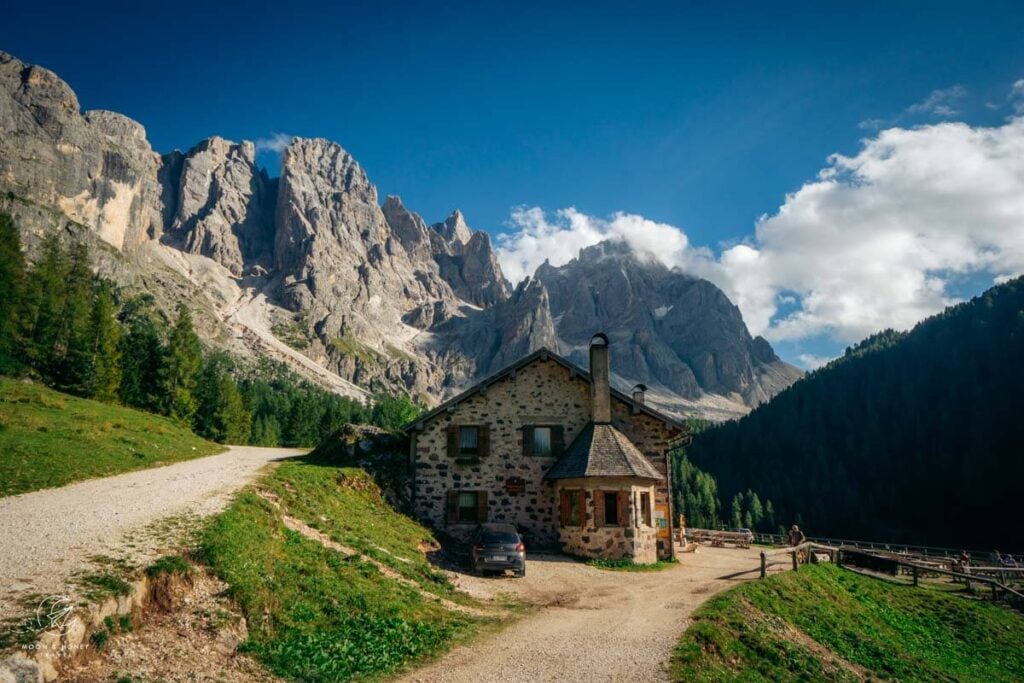
A Malga is a mountain hut, located on an alpine pasture. Depending on what region you’re in, a Malga may also be called a “Schwaige” or an “Alm” (German-speaking South Tyrol).
Unlike a Rifugio (mountain shelter), Malgas usually don’t offer overnight lodging. However, if you visit during pasture season (usually late June until mid-September), you can savor fresh dairy (yogurt, cheese, and sour milk) and warm food during the day. These alpine pasture huts usually prepare their food using homemade products and local ingredients.
In the summer months, alpine pastures are home to grazing cows, sheep, and goats. While these animals aren’t dangerous, it’s important to keep a safe distance from them, and refrain from petting, feeding, or otherwise disturbing them. Read more about alpine transhumance in Visiting the Alps in Summer.
Many hiking routes pass through alpine pastures, so you can enjoy a homemade meal during your hike.
Our Favorite Malga Alpine Huts
Gostner Schwaige and Rauchhütte on Alpe di Siusi. You can visit both huts along the Hans and Paula Steger Trail starting in Compaccio/Compatsch.
Malga Canali in Val Canali, Pale di San Martino. We wrote about visiting this Malga in our guide to San Martino di Castrozza.
Malga Venegiota di Tonadico in Val Venegia, Pale di San Martino. We ate in this Malga after hiking the Val Venegia and Rifugio Mulaz Hike.
Gschnagenhardt Alm in Val di Funes. You can hike to this mountain pasture hut along the Adolf Munkel Trail.
Malga Brogles in Val di Funes. You can hike here from various trailheads in Val di Funes as well as the Resciesa plateau. We visited this Malga when we hiked this Resciesa to Seceda trail, starting in Ortisei, Val Gardena.
9. Hike around Colossal Dolomites Mountains

You don’t have to summit peaks, or ascend 1000+ meters to experience the best vistas of the Dolomites. Some of the very best views are accessible by easy walking paths across rolling meadows and mountain plateaus.
Because the Dolomites is a popular ski region, the ski infrastructure makes hiking even easier. Many cableways and gondolas operate in summer, delivering you to mountaintops and plateaus, thus cutting out lengthy ascents and descents.
Read Best Hikes in the Dolomites for a summary of our favorite day hikes in the Pala Group, Sella Group, Puez-Odle Group, Sassolungo Group, Sexten Dolomites, Ampezzo Dolomites, and more.
Easy Walks
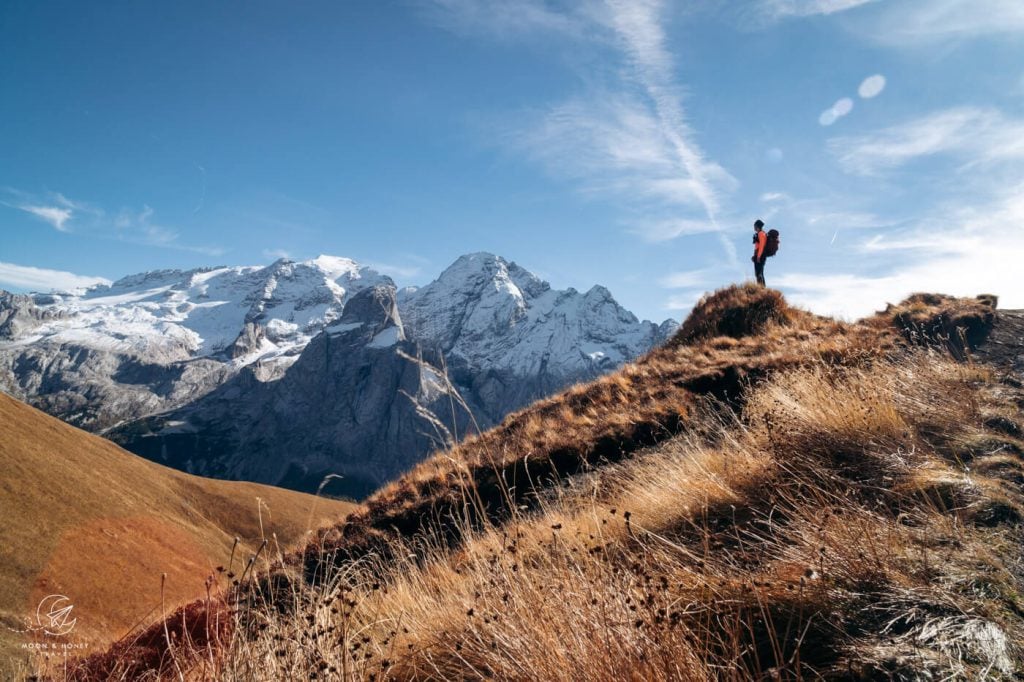
Here are some excellent easy walks in the Dolomites. These hikes are not technical, but they still involve some elevation gain/loss.
Many of these trails are located at high elevations, so you may be short of breath. Take your time and drink plenty of water.
- Armentara Meadows in Alta Badia
- Adolf Munkel Trail in Val di Funes
- Santa Maddalena Panorama Trail in Val di Funes
- Seceda to Regensburger Hütte in Val Gardena
- Baita Segantini and Monte Castellaz near San Martino di Castrozza
- Alpe di Siusi Meadows Circuit Trail in Alpe di Siusi
- Alpe di Siusi to Monte Pana in Alpe di Siusi
- Hans and Paula Steger Trail in Alpe di Siusi
- Passo Giau to Monte Mondeval near Cortina d’Ampezzo
- Tre Cime di Lavaredo Circuit Trail near Alta Pusteria and Cortina d’Ampezzo
- Monte Specie Summit Hike starting at Prato Piazza in Alta Pusteria
Moderate Hikes


These Dolomites hiking trails involve more significant elevation gain and loss. They also require sure-footedness and comfort navigating uneven limestone-dolomite terrain (karst, scree, loose rocks).
- Tofana di Rozes Circuit Trail near Cortina d’Ampezzo
- Croda da Lago Circuit Trail near Cortina d’Ampezzo
- Sass de Putia Circuit Trail near Val di Funes and Alta Badia
- Rifugio Genova Circuit Hike in Val di Funes
- Sass da Ciampac Summit Hike in Alta Badia
- Hochalpenkopf Peak Hike starting at Lake Braies, Alta Pusteria
- Tullen Peak Hike in Val di Funes
- Monte Pic in Val Gardena
- Gaisl High Trail in Alta Pusteria
- Sassolungo Circuit Trail between Val Gardena and Val di Fassa
- Vallunga Valley and Val de Chedul in Val Gardena
- Cinque Torri and Rifugio Nuvolau in Cortina d’Ampezzo
- Vallon Popera near Alta Pusteria
Difficult Hikes
These challenging Dolomites hikes are technically demanding. Many of these trails involve some scrambling and hiking along secured passages. Hikers should be confident hiking in crumbling terrain and along airy ledges.
- Torre dei Scarperi Hike in Alta Pusteria
- Rifugio Stevia and Col dala Pieres Day Hike in Val Gardena
- Resciesa to Seceda in Val Gardena
- Sentiero Bonacossa Trail near Alta Pusteria and Cortina d’Ampezzo
- Pala di San Martino Circuit Trail: Rifugio Rosetta to Rifugio Pradidali near San Martino di Castrozza
- Cima della Vezzana Summit Hike near San Martino di Castrozza
- Val Venegia to Rifugio Mulaz Circuit Hike in San Martino di Castrozza
- Lake Pisciadù Day Hike in Alta Badia
- Piz Duleda in Val Gardena
10. Photograph the Iconic Lakes of the Dolomites

Undoubtedly, the most popular destinations in the Dolomites are the mountain lakes.
With the growing popularity of the region, many of these lakes are getting too crowded. In particular, Lake Braies, Lake Carezza, and Lake Sorapis are extremely busy.
It’s best to visit these popular Dolomites lakes off-season.
Lakes You Can Drive to
Lago di Braies (Pragser Wildsee in German) in Braies/Prags Valley, South Tyrol. Though Lago di Braies is a destination in and of itself, you can extend your visit by hiking from Lago di Braies to Hochalpenkopf. This secret hike affords incredible views of the Braies Dolomites.
Lago di Misurina in the Cadore region, Belluno, Veneto.
Lago di Dobbiaco (Toblacher See in German) in Alta Pusteria, South Tyrol. There is a very pleasant walking trail that circuits this lake. It’s accessible all-year-round.
Lago d’Antorno near Lago di Misurina in Belluno, Veneto. Insider tip: you can hike to the Cadini di Misurina viewpoint from Lake Antorno.
Lago di Carezza (Karersee) in Val d’Ega/Eggental, South Tyrol. Lake Carezza is a small mountain lake in South Tyrol, which affords jaw-dropping views of the Latemar mountain group. Because it’s located on the side of the road, it feels like a busy bus stop. You can walk around the whole lake, but don’t expect to be alone.
Lakes You Can Hike to
Lago di Coldai is located at the foot of Mount Civetta near Rifugio Coldai in Belluno, Veneto.
Lago di Sorapis is located in the Sorapiss mountain group in Belluno, Veneto.
Lago Federa is located beneath the eastern wall of Croda da Lago in the Ampezzo Dolomites, near Cortina d’Ampezzo, Belluno, Veneto. We recommend hiking to Lake Federa along the Croda da Lago Circuit Trail.
Lago delle Baste is a tiny lake (more like a pond) atop the Mondeval Plateau. Though it’s really small, it serves as a pretty foreground for Monte Pelmo and Lastoni di Formin.


Pin this Image for Future Trip Planning!
Stay Connected:
Connect with us on Pinterest.
Follow us on Instagram.
Like us on Facebook.
Support Us:
If you love reading our content, you can buy us a coffee via Ko-Fi.