September is the perfect month to hike in the Dolomites. The weather is generally stable, skies are clear, temperatures are mild, rifugios are open, and most cableways (chairlifts, gondolas, funiculars, etc… ) operate all month.
September very much feels like the extension of summer. It’s not as crowded as July and August, but it’s still bustling with hikers. Though there are no wildflowers, landscapes are still vividly green across the region. If you’re interested in seeing fall foliage, it’s better to visit in mid-late October.
Good to know: Late September is rutting season, so you may hear roaring stags in more remote areas of the Dolomites.
In this guide, I’ve outlined everything you need to know about visiting the Dolomites in September.

- The average daytime temperature hovers around 20°C / 68°F
- Rifugios (mountain huts) are generally open until late September. Some high-elevation huts close the third week of September. Some huts stay open until mid-October, depending on snow conditions.
- Cableways (gondolas, chairlifts, etc…) operate all month.
- Buses (in South Tyrol) operate the whole month of September, though there is a schedule change starting in mid-September, with reduced bus frequency.
- Between July 1st and September 15th, driving access to Lago di Braies/Pragser Wildsee is restricted during peak hours.
- The Rifugio Auronzo – Tre Cime di Lavaredo toll road is open all month. In the unlikely event of a snow storm, the road will be closed.
- The Dolomites Hut to Hut Hiking season ends around the third week of September.
Weather in the Dolomites in September

September has a reputation for being stable. And for the most part, it is. But, freak snow storms can certainly happen.
We’ve visited the Dolomites in September several times. During our first September visit, we only experienced 4.5 days of rain out of 21 days. On the days that it rained, it poured all day.
On one such rainy day, while hiking the Alta Via 1, the rain turned into sleet, which then turned into snow. And before we even realized it, we were in the middle of a snow blizzard trying to find Rifugio Lagazuoi (September 8th). For a semi-dramatic retelling of getting through this storm, check out this Instagram post.

Note to everyone: if it starts to snow and you still have a lot of elevation to gain, turn back around. Footprints and waymarks get covered up and you’ll have an impossible time trying to find your way when the snow is blinding you and you’re freezing cold.
The weather gods must have felt sorry for us. Because for the next 17 days we had brilliant weather with clear skies and burning red sunsets.
The point is that September is generally a great month to hike in the Dolomites, but like anywhere in the mountains, the weather can be unpredictable.
During our second visit to the Dolomites in mid-September (specifically to San Martino di Castrozza), the weather was brilliant again. It only rained once during our seven-day trip.
During our third visit to the Dolomites in late September, we experienced unusually cold temperatures. Mornings were frigid, around 2°C (35.6°F). We had to scrape the frost off our windshields in the morning. We wore puffer jackets and leggings under our hiking pants. During this particular trip, the weather was actually sunnier and warmer in mid-October.
During our fourth visit to the Dolomites in late September, skies were clear and temperatures were unseasonably warm.
Average Temperature in the Dolomites in September
The average daytime temperature is 20°C (68°F).
The average nighttime temperature is 9°C (48.2).
Special Events
Almabtrieb / Desmontegada


In the Alps, cattle, goats, and sheep graze in the mountain pastures during the summer months. At the end of the grazing season, farmers steer their cattle, goats, and sheep back down to their winter stalls in the valley.
In many places, this cattle drive descent (Almabtrieb, Alpabzug, Desmontegada, Viehscheid) is a festive occasion. Locals celebrate the safe return of the animals by crowning their cattle with headdresses and outfitting them with large ceremonial bells. The farmers and herdsmen typically wear traditional folk costumes (“Trachten”).
The “Almabtrieb” (German), or “Desmontegada” (Italian) marks the end of summer in the Alps.
Customarily, these cattle drives occur on Saturdays throughout the month of September. In the Dolomites, you can see a traditional Almabtrieb in several places.
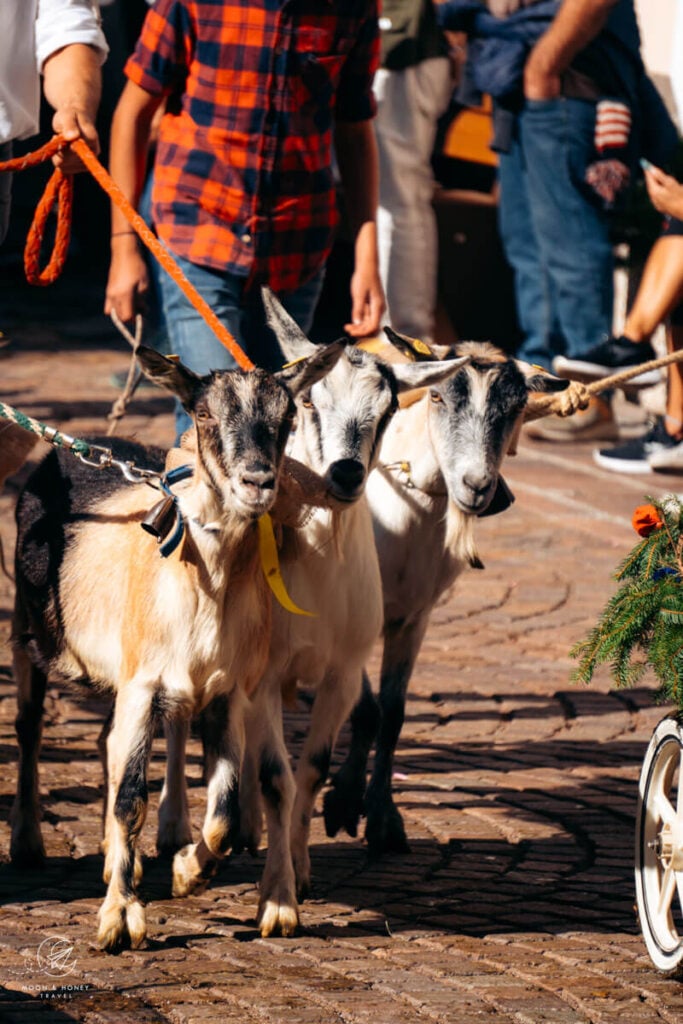
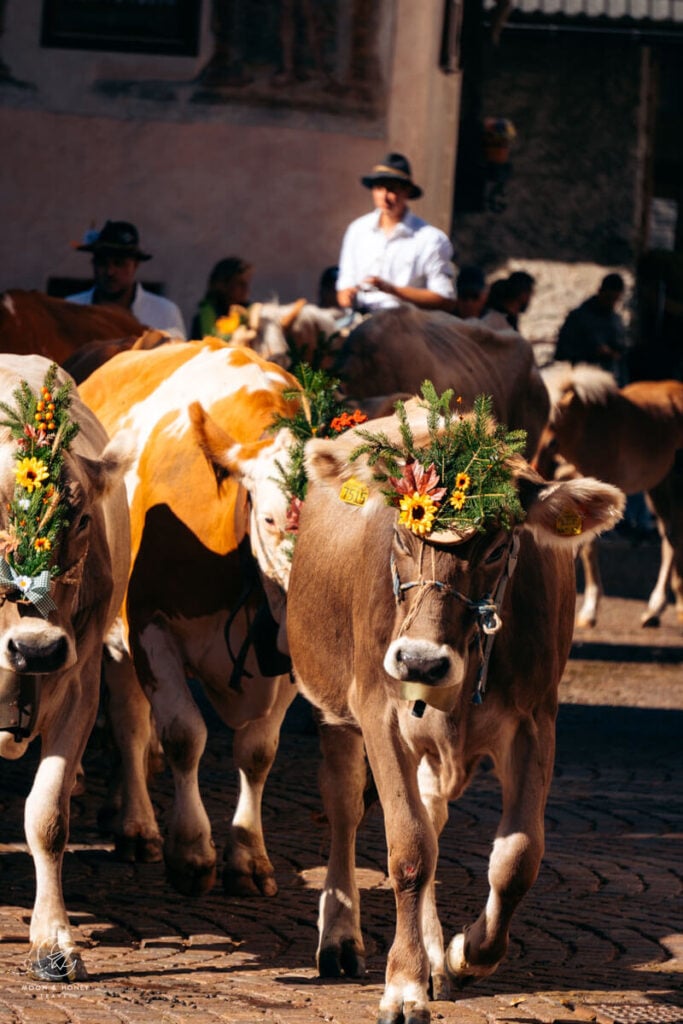
One of the most spectacular celebrations takes place in Primero Valley in Trentino in late September. The Gran Festa del Desmontegar is a 4-day event culminating in the “Desmontegada” cattle, goat, sheep, horse, and donkey drive. Another festive cattle drive in Trentino is Moena’s Desmontegada in Val di Fassa.
In South Tyrol, there are several festive Almabtriebe including the Sextner Almabatrieb, the Langalm and Flodige Alm in Dobbiaco/Toblach, the Gní de munt – Almabtrieb in Badia, the Castelrotto/Kastelruth Almabtreib, the Compaccio/Compatsch Almabtrieb on Alpe di Siusi/Seiser Alm, and others.
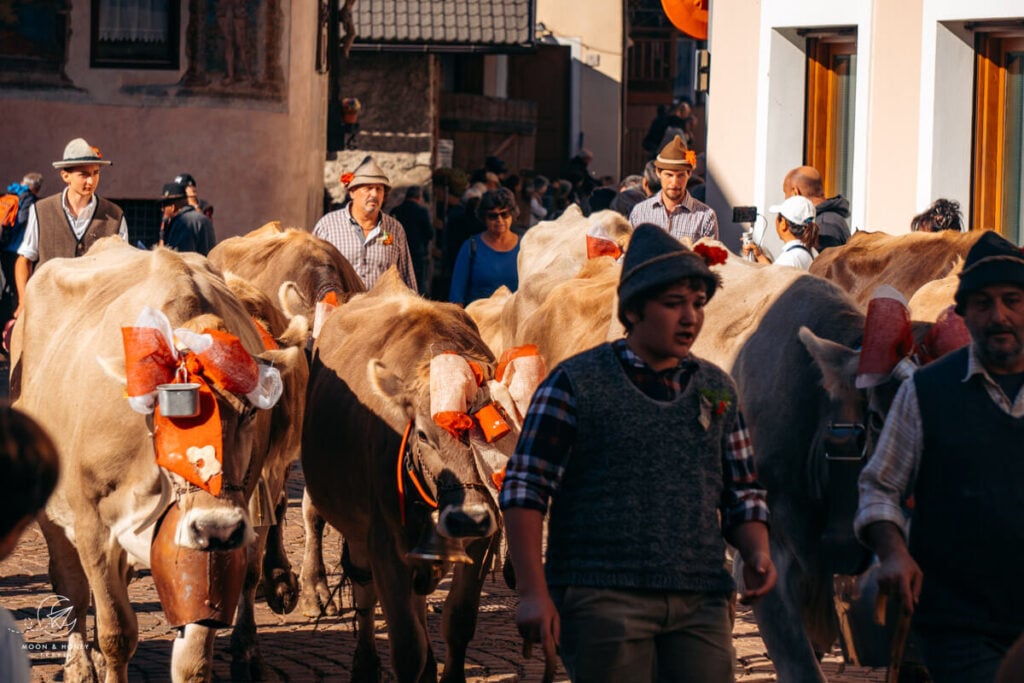
If you decide to participate, we recommend reaching out to the local tourist office in advance to find out where to stand. It’s not always clear where the procession takes place.
It’s a privilege to be able to see these traditional alpine events. In some places in the Alps (e.g. Schönau am Königssee), tourist offices have stopped publishing the dates of their Almabtriebe, because of idiotic spectator behavior, which has endangered and stressed out the animals.
Please respect this tradition by not obstructing the way of the animals and farmers. Take your photos from the side of the road.
Learn More: Almabtrieb: Cattle Drive Festival in the Alps
Gondolas, Chairlifts, and Cable Cars

Hiking in the Dolomites is extremely accessible due to robust Dolomiti Superski ski infrastructure, a system of gondolas, chairlifts, funiculars and cable cars. Many hikes begin with cableways, thus cutting out long tedious ascents.
Most cableways in the Dolomites operate until the third week of September. In Cortina d’Ampezzo, they typically run until around September 20, while in Alta Badia, most cableways remain open until early October. Several popular cableways in Val Gardena and Alta Pusteria stay open until late October.
While cableways make it possible to reach many higher-altitude trails and summit hikes in a single day, they are not essential for most hikes. So, I wouldn’t be too concerned if the cableways are closed during your visit. There are still plenty of wonderful trails and hiking options to choose from.
Rifugio Opening Times

One of the most memorable experiences in the Dolomites is staying at, or simply stopping by, a rifugio. On a day hike, you can enjoy lunch at a mountain hut or alpine pasture hut, often surrounded by grazing cattle, horses, or donkeys. On a hut-to-hut trek, you’ll spend the night in rifugi at the end of each stage.
Mountain huts in the Dolomites are generally open from late June until late September. Some huts close down for the season on the last Sunday of September, while others close down on the last day of September.
If you’re planning a hut to hut trek in the Dolomites in September, it’s important to research the opening times of each mountain hut. Depending on the weather conditions, some rifugi will stay open until mid-October.
You can read about which mountain huts stay open in October in my guide to hiking in the Dolomites in October.
Hikes to Mountain Huts
All of the trails below lead to managed mountain huts and/or alpine pasture huts (food & drinks only). Unless otherwise specified, these are day hikes. For a round-up of our favorite day hikes, read Best Day Hikes in the Dolomites and Easy, Family-Friendly Walks in the Dolomites.
Cortina d’Ampezzo:
- Rifugio Croda da Lago along the Croda da Lago Circuit Trail
- Rifugio Vandelli along the Lago di Sorapis hike
- Rifugio Dibona and Rifugio Giussani along the Tofana di Rozes Circuit Trail
- Rifugio Averau and Rifugio Nuvolau along the Rifugio Nuvolau and Cinque Torri hike
- Rifugio Lagazuoi along the Kaiserjägersteig
- Rifugio Auronzo and Rifugio Fonda Savio along the Sentiero Bonacossa Trail
Val Gardena:
- Rifugio Malga Brogles along the Resciesa Plateau to Seceda hike
- Rifugio Firenze along the Seceda – Rifugio Firenze loop hike and Piz Duleda peak hike
- Rifugio Stevia along the Col dala Pieres peak hike
- Rifugio Sasso Piatto along the Sassolungo Circuit Trail
- Several Almhütten along the Alpe di Siusi Meadows Trail
- Rifugio Puez along the Vallunga and Val de Chedul hike
Val di Funes:
- Rifugio Genova along the Rifugio Genova Circuit Trail
- Various Almhütten along the Adolf Munkel Trail
Alta Badia:
- Jimmy Hütte along Sass da Ciampac hike, Gran Cir
- Rifugio Gardenacia along the Rifugio Puez and Rifugio Gardenacia hike
- Rifugio Scotoni along the Lake Lagazuoi circuit
- Rifugio Fanes and Rifugio Lavarella
- Rifugio Pisciadu along the Pisciadu Peak Hike
- Rifugio Pralongia along the Störes Meadows hike
- Rifugio Franz Kostner al Vallon along Lichtenfelsersteig: Vallon to Piz Boè
- Edelweiss Hütte along Sassongher Peak Hike
Val di Fassa / Arabba:
- Rifugio Viel dal Pan along the Sentiero Viel del Pan hiking trail
Pale di San Martino:
- Rifugio Mulaz along the Val Venegia to Rifugio Mulaz hike
- Rifugio Rosetta along the Cima della Vezzana peak hike
- Rifugio Pradidali along the Pala di San Martino Circuit Trail
Siusi / Castelrotto:
- Rifugio Bolzano and Rifugio Alpe di Tires along this Alpe di Siusi – Rifugio Bolzano hike
Val d’Ega:
- Gartlhütte along the 3-Day Rosengarten Trek
Alta Pusteria:
- Rifugio Locatelli along the Torre dei Scarperi Circuit Trail
- Rifugio Locatelli and Rifugio Pian di Cengia along this 3-day Tre Cime di Lavaredo Trek
- Rifugio Auronzo, Rifugio Lavaredo and Rifugio Locatelli along the Tre Cime di Lavaredo Circuit Trail
- Rifugio Vallandro on Prato Piazza plateau along the Monte Specie hike
Where to Stay in the Dolomites in September
San Martino di Castrozza
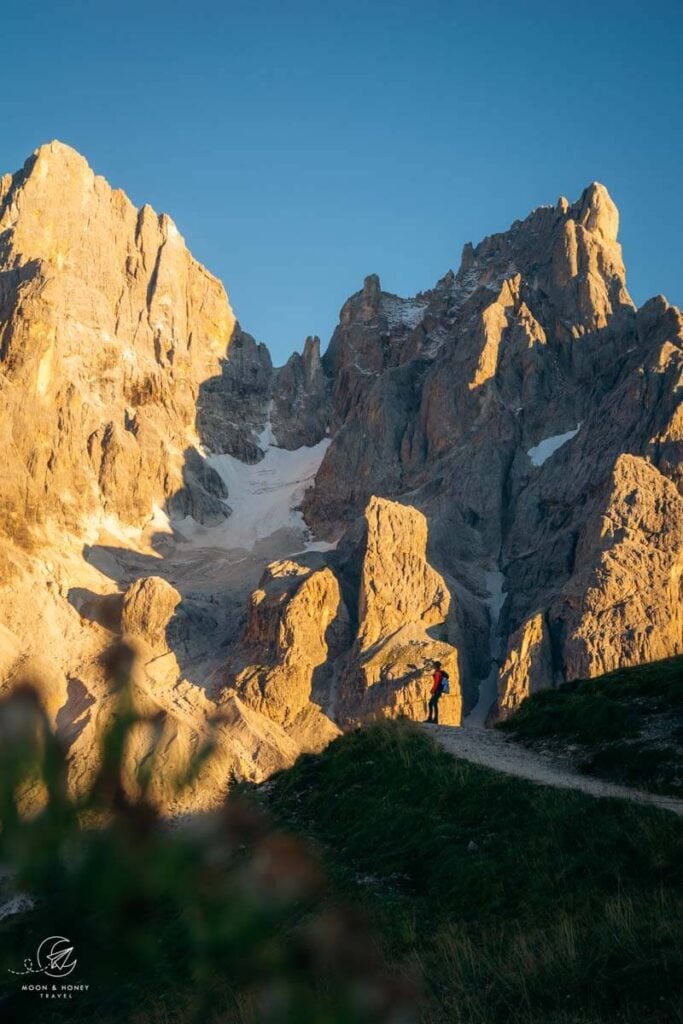

San Martino di Castrozza is a resort town in Primiero Valley in Trentino, which lies between the impressive Pale di San Martino Group (Pala Group) and the Lagorai mountain range.
The Pala Group is the largest massif in the Dolomites. Its vast central plateau, Altopiano delle Pale di San Martino, is easily accessible from the town via the Colverde Gondola and Rosetta Cableway. Ride these cableways to start the Pala di San Martino Circuit (difficult) or Cima della Vezzana peak hike (challenging).
I also highly recommend hiking the Passo Rolle – Baita Segantini hike (easy-moderate) and Val Venegia – Rifugio Mulaz hike (moderately difficult).
The Pale di San Martino Dolomites are breathtaking, and often overlooked. Start your September road trip here, and you won’t regret it. Aim for early to mid-September, as the summer season winds down earlier here than in other Dolomite regions.
Compared to other Dolomites regions, accommodations are more budget-friendly in Primiero Valley. Take a look at Residence Taufer (apartments), Hotel Vienna (3-star hotel), and Sayonara Nature & Wellness Hotel (3-star hotel – top choice).
All accommodations in San Martino di Castrozza.
Cortina d’Ampezzo
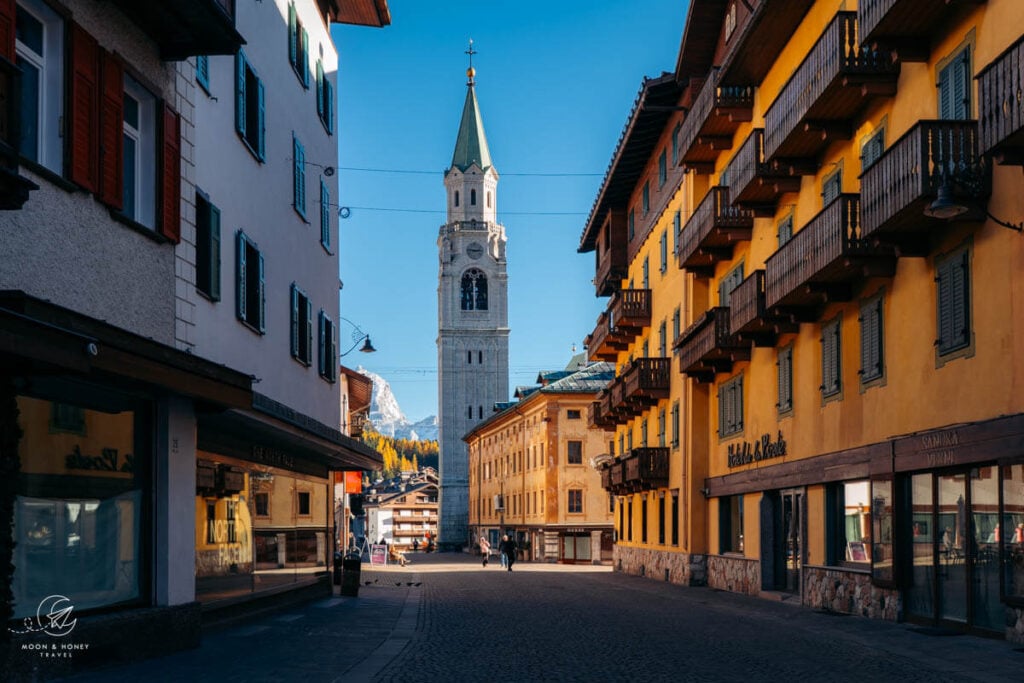
Surrounded by mountains on all sides, Cortina d’Ampezzo is arguably the most beautifully situated town in the Belluno Dolomites. As the largest town in the Dolomites, it also offers the widest selection of restaurants, bars, and shops.
Most mountain huts around Cortina d’Ampezzo close in late September. If conditions permit, a few huts stay open until October, most notably Rifugio Lagazuoi and Rifugio Croda da Lago at Lago Federa.
Also, most Cortina cableways stop operating in mid-late September. However, this has never impacted our trip, because the best hikes in Cortina do not require a cableway:
- Kaiserjägersteig to Lagazuoi (difficult / secured trail)
- Setsas Circuit Trail (moderate)
- Lago di Sorapis (moderately difficult)
- Croda da Lago Circuit (difficult)
- Tofana di Roses Circuit (difficult)
- Passo Giau to Mondeval and Lago delle Baste (moderate)
- Cinque Torri and Rifugio Nuvolau (moderate)
- Tre Cime di Lavaredo Loop Trail (easy-moderate)
- Cadini di Misurina Viewpoint (easy-moderate)
- Sentiero Bonacossa North Trail (difficult)
For a more lively atmosphere, we recommend visiting Cortina early-mid September. If you’re more interested in quiet trails, visit later in the month.

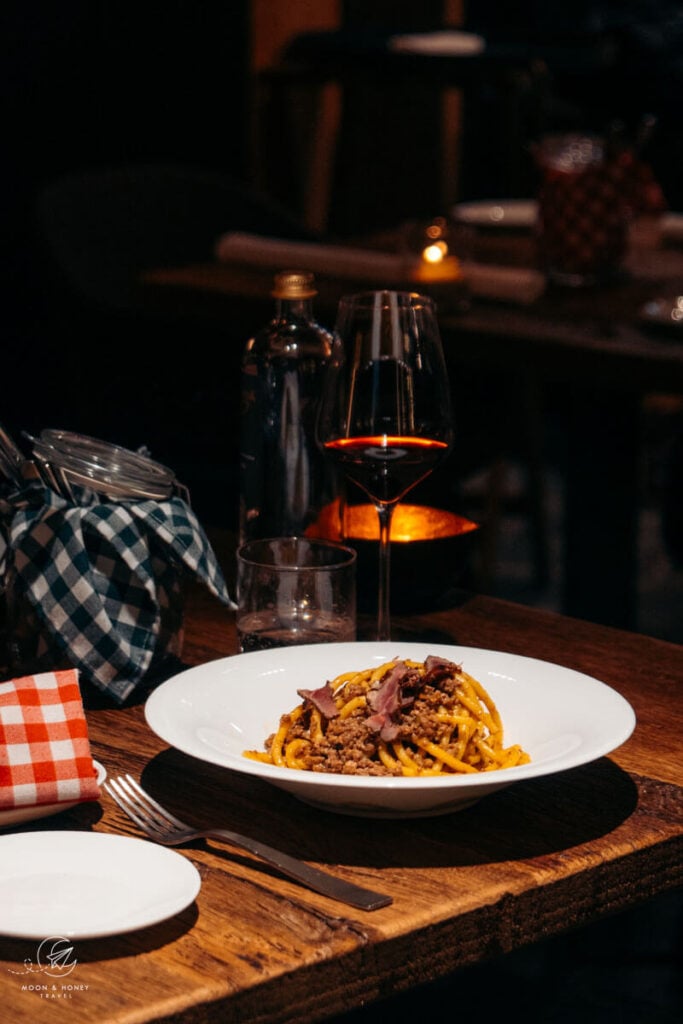
If you’re visiting without a car, I recommend staying somewhere central like Hotel Meuble Oasi (2-star guesthosue), Hotel Villa Alpina (3-star hotel housed in a historic villa), Ambra Cortina Luxury&Fashion Hotel (4-star boutique hotel), or HOTEL de LËN (4-star hotel, see my Hotel de Len review).
If you’re traveling with a car, also take a look at Baita Fraina (B&B withMichelin-listed à la carte restaurant), Camina Suite & Spa (4-star boutique hotel, see my Camina Suite & Spa hotel review), Ciasa Vervei (3-star hotel near many trailheads).
Read Next: Where to Stay in Cortina d’Ampezzo
Val Gardena

Val Gardena is a scenic valley in South Tyrol, stretching from Passo Gardena and Passo Sella to the Valle Isarco. Surrounded by the Puez-Odle, Sella, and Sassolungo groups, it’s home to three main villages: Ortisei, Santa Cristina, and Selva di Val Gardena.
Ortisei is the most convenient base for car-free travelers. Take a look at Casa al Sole (B&B, see my Casa al Sole Review).
Santa Cristina is the best base for visitors traveling by car who are seeking a quieter, more peaceful stay: Garni Le Chalet (2-star guesthouse) Dorfhotel Beludei (4-star boutique hotel with excellent half board dining, see my Dorfhotel Beludei Hotel Review).
And in my opinion, Selva has the most idyllic setting, with quick access to quieter, lesser-known trails: Hotel Garni Morene (3-star guesthouse), Garni Sunela (B&B), Garni Hotel Bel Vert (3-star guesthouse), Linder Cycling Hotel (luxury hotel), Hotel Tyrol (5-star hotel).
Read my Val Gardena hotel guide to learn about the best accommodations in Ortisei, Santa Cristina, and Selva.


Val Gardena has one of the longest summer seasons in the Dolomites, running from early June through late October. Cableways, mountain huts, hotels, and restaurants stay open throughout September. Early September tends to be much busier than late September.
This destination is ideal for anyone traveling without a car, thanks to the excellent transit system and cableways.
Though many trails in Val Gardena require the use of a cableway, many do not, including Steviola Plateau (moderate), Vallunga Valley and Val de Chedul (moderately difficult), Sassolungo Circuit hike (moderate, but long), and Monte Pic (moderate).
Val Gardena Summer Cableways
If you visit in September, you can take advantage of all of the following cableways.
Resciesa Funicular | The Resciesa funicular connects Ortisei village with the Resciesa plateau. Very few people know that you can hike across the Resciesa Plateau to the Adolf Munkel Trail in Val di Funes. Hikers looking for a challenge will enjoy this Resciesca to Malga Brogles to Seceda hike. For an easy, but rewarding hike, simply walk to Malga Brogles out-and-back.
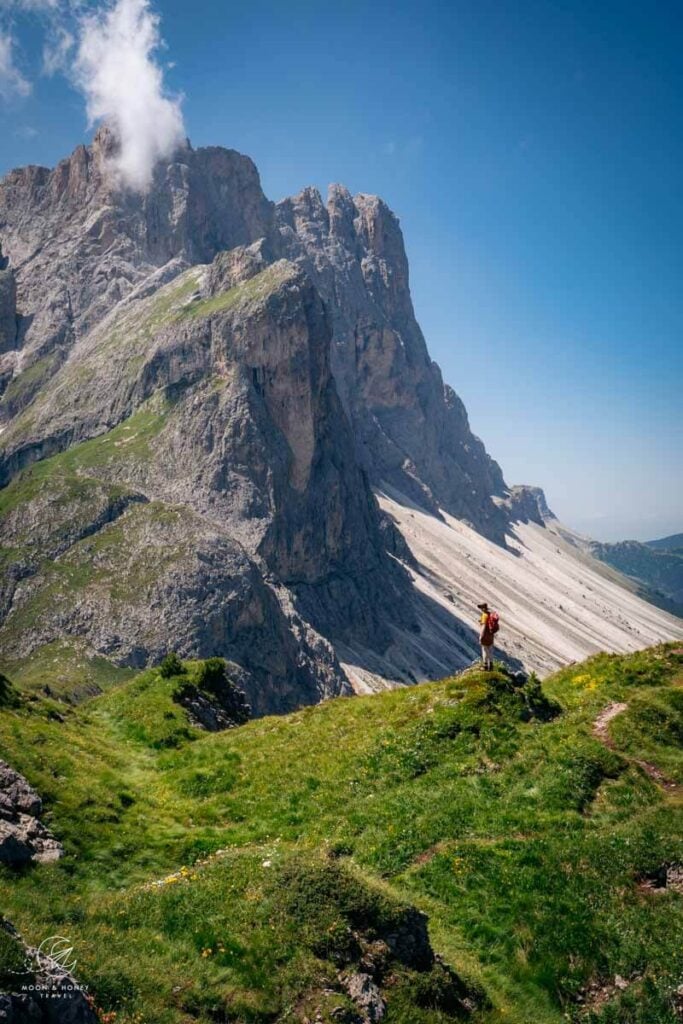
The Ortisei-Furnes-Seceda Cableways | The Seceda cableways (pre-booking required) connect Ortisei with Seceda, a summit that affords unforgettable views of the jagged Geisler Peaks. From the mountain station, follow this lovely circular route to Rifugio Firenze.
Ortisei Alpe di Siusi Ropeway | The Ortisei-Alpe di Siusi Ropeway connects Ortisei with the Alpe di Siusi plateau. I recommend hiking this Alpe di Siusi meadows circuit trail.
Col Raiser Cable Car | The Cola Raiser gondola connects Santa Cristina with Puez-Odle Nature Park. From the mountain station, you can hike to Seceda, Rifugio Firenze, and the Stevia Alp. You can also tackle the demanding Col dala Pieres and Piz Duleda peak hikes and Via Ferrata Sass Rigais.
Forcella Sassolungo Gondola | This 2-person gondola, known as the Coffin lift, connects Passo Sella with Forcella Sassolungo. Hikers ride this lift as a variation of the Sassolungo loop. We rode this gondola to access the start of the Via Ferrata Oskar Schuster.
Dantercepies Gondola | The 2-stage Dantercepies gondola connects Selva with the Cir Group. From the mountain station, you can hike to Jimmy Hütte, Gran Cir, Sass da Ciampac, and even continue across the Puez-Odle Plateau to Puez Hut and down Vallunga Valley to Selva.
Val di Funes

Val Di Funes (Vilnösstal in German) is the 24-km-long South Tyrolean valley that runs from Valle Isarco, just north of Chiusa and south of Bressanone, to the Odlemountain range.
Though most people visit Val di Funes as a day trip from Bressanone, or Ortisei, I recommend staying here at least two or three nights.
The valley’s alpine pasture huts (Almhütten) stay open throughout the whole month of September. You can drop by these huts for lunch on the Rifugio Genova Circuit Hike (moderate) and Adolf Munkel Day Hike (easy). Hikers looking for a quiet, off-the-beaten-path hike ought to tackle the Tullen Summit (difficult). I also recommend driving up to Passo delle Erbe to hike the Sass de Putia Circuit (moderate).
For fairy-tale-like views of Val di Funes, hike the Santa Maddalena Panorama Trail (easy).
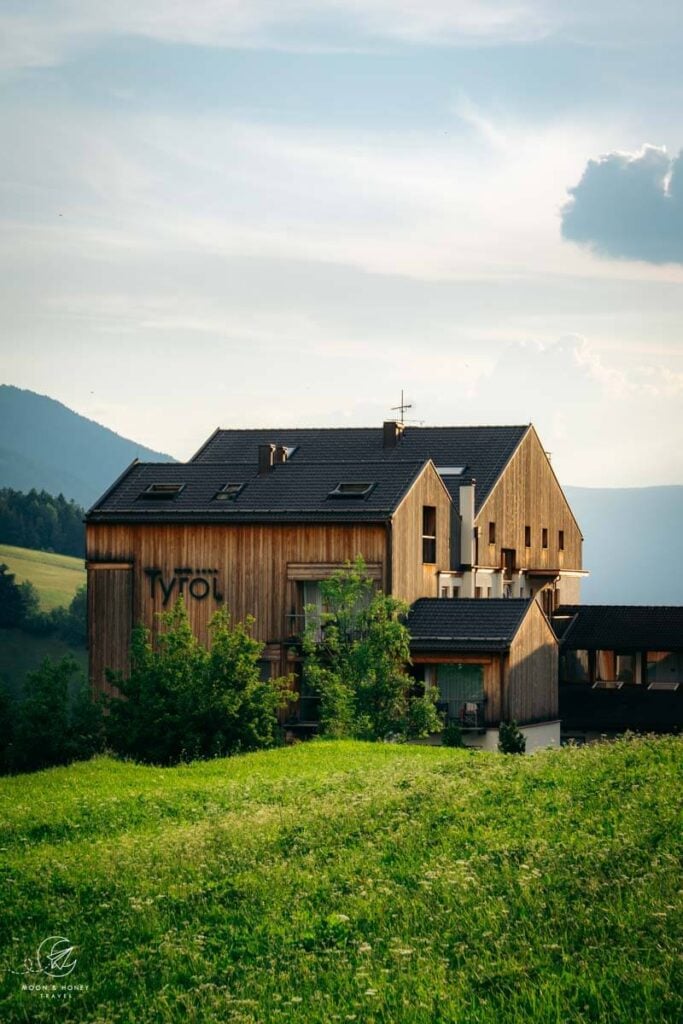
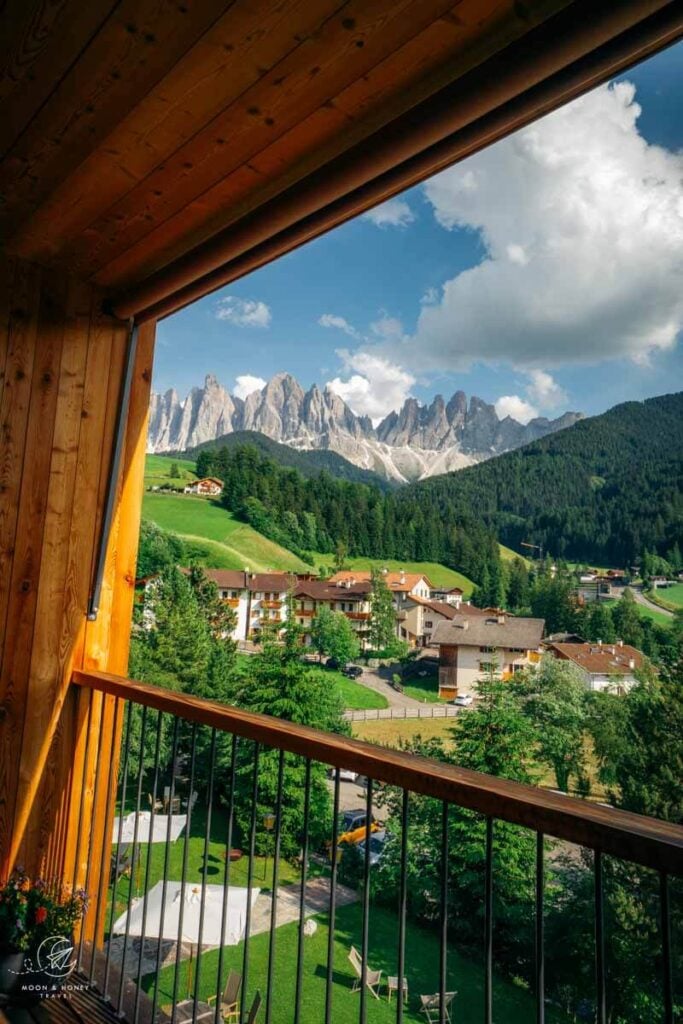
In Val di Funes, you’ll find a mix of farm stay apartments, guesthouses, and hotels in Tiso/Teis, S. Pietro/St. Peter and S. Maddalena/St. Magdalena. In Santa Maddalena, stay in Fallerhof (budget-friendly farm stay), Guesthouse Odle (apartments), Oberkantiolhof (apartments), Hotel Fines (3-star hotel), Hotel Tyrol Dolomites Slow Living (4-star hotel). In San Pietro, take a look at Viel Nois Guest House (4-star hotel) and Peterwieshof (apartments).
Learn More: Val di Funes Travel Guide
Alta Badia

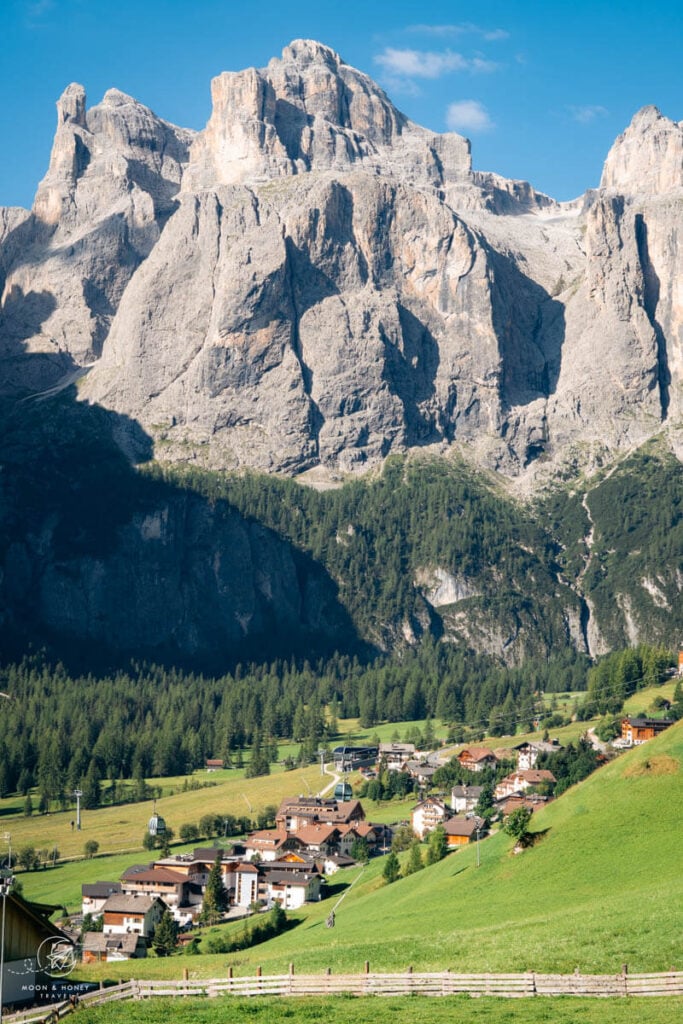
Alta Badia, the holiday region of Upper Val Badia, encompasses the villages of Colfosco, Corvara, La Villa, San Cassiano, Badia, and La Val. It’s famous for its Ladin culture, family-run hotels, mountain hiking trails, and gourmet huts. Families with kids particularly enjoy Alta Badia, thanks to its abundance of kid-friendly trails and mountain playgrounds.
Most Alta Badia cableways operate until late September, or early October. I recommend taking advantage of the La Crusc gondolas to access Armentara Meadows (easy) or Via Ferrata Sass dla Crusc (Grade A/B, challenging). If there’s no snow, ride the Boè and Vallon cableways to access the Lichtenfelser Steig to Piz Boè, the highest peak in the Sella Group (Grade A/B, challenging).
You can ride various gondolas up to the sprawling Pralongia plateau (Col Alt, Piz La Ila, or Piz Surega), or skip the cableways and hike this Störes Meadows Trail to Rifugio Pralongia (easy) instead.
These hikes do not require any cableways: Kreuzjoch Circuit (moderate – moderately difficult), Lake Lagazuoi (moderate), Sass da Ciampac (moderately difficult), Setas Circuit Trail (moderate), Kaiserjägersteig (difficult), Lake Pisciadù (difficult), Sassongher (difficult / special equipment required),
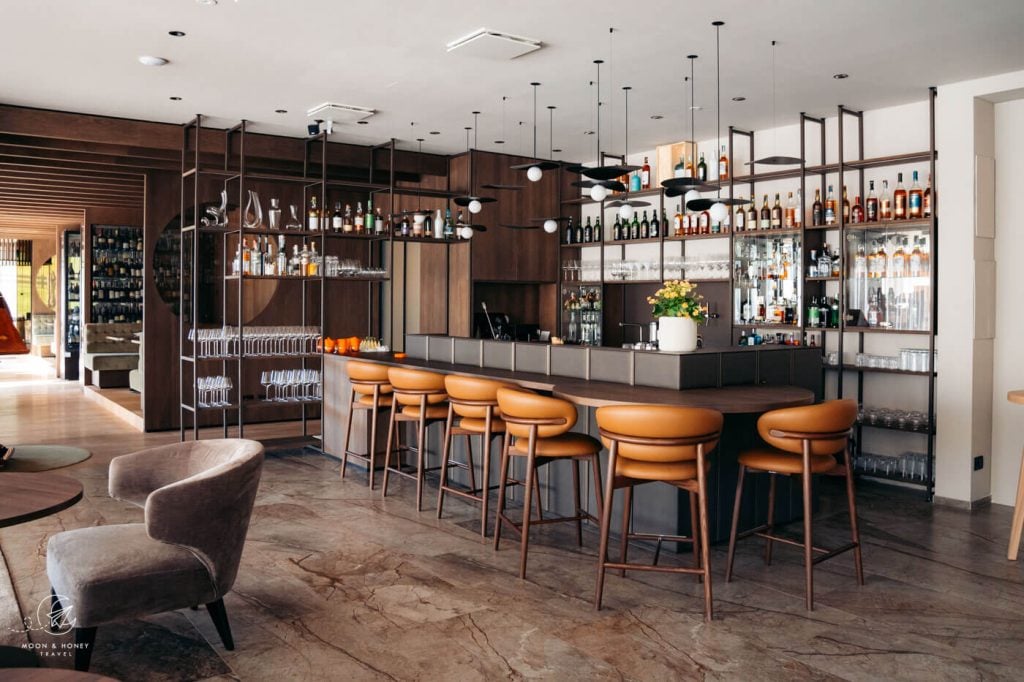
Read my Alta Badia hotel guide to learn about the best accommodations in Val Badia, including Hotel Jägerhof (3-star hotel in Colfosco), Hotel Col Alto (4-star hotel in Corvara), Hotel Ciasa Soleil (boutique hotel in La Villa), Badia Hill (4-star design hotel in Badia, see my Badia Hill hotel review)
Dolomites September Itineraries
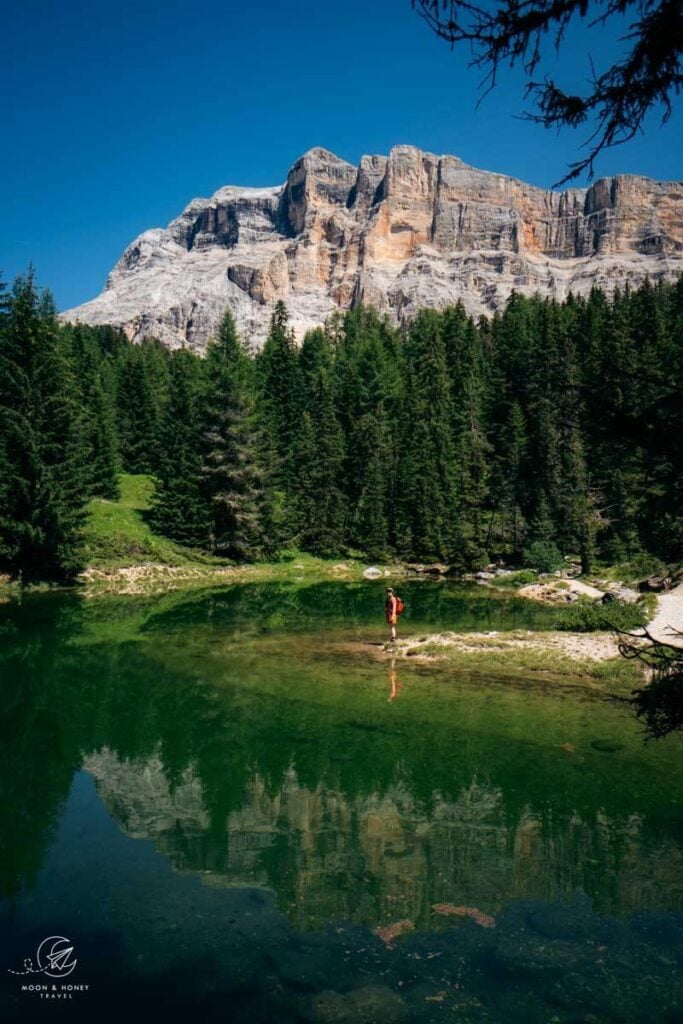
5 Days | With 4 nights and 5 days, we recommend staying 2 nights in Val Gardena (or Alta Badia) and 2 nights in Cortina d’Ampezzo. Read our 5-Day Dolomites Itinerary. Alternatively, you can stay 4 nights in a single base. For inspiration on how to plan a single base trip, read my Val Gardena itinerary.
7 Days with a car | With 6 nights, I recommend dividing your time between two destinations. Stay 3 nights in San Martino di Castrozza and 3 nights in Cortina d’Ampezzo.
7 Days without a car | I recommend basing yourself in Val Gardena and Alta Badia. See How to Visit the Dolomites Without a Car.
10-14 Days | Explore the best places across the Dolomites in this 10+ Day Dolomites Itinerary.
Transit in September
For traveling in South Tyrol, use the Südtirol Mobil site for bus timetables.
Buses run throughout the whole month of September. However, starting in mid-September, the bus schedule changes.
The main difference between high season (early September) and shoulder season (late September) is the bus frequency and last bus departure. For example, in late September, some buses will stop operating an hour earlier than in high season.
Packing List
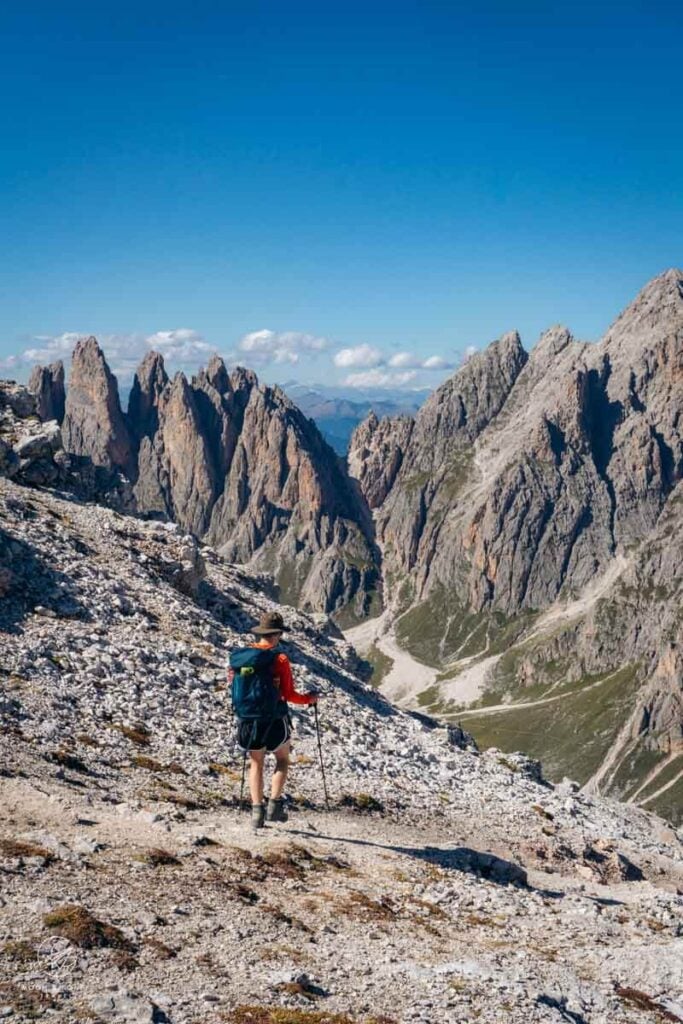
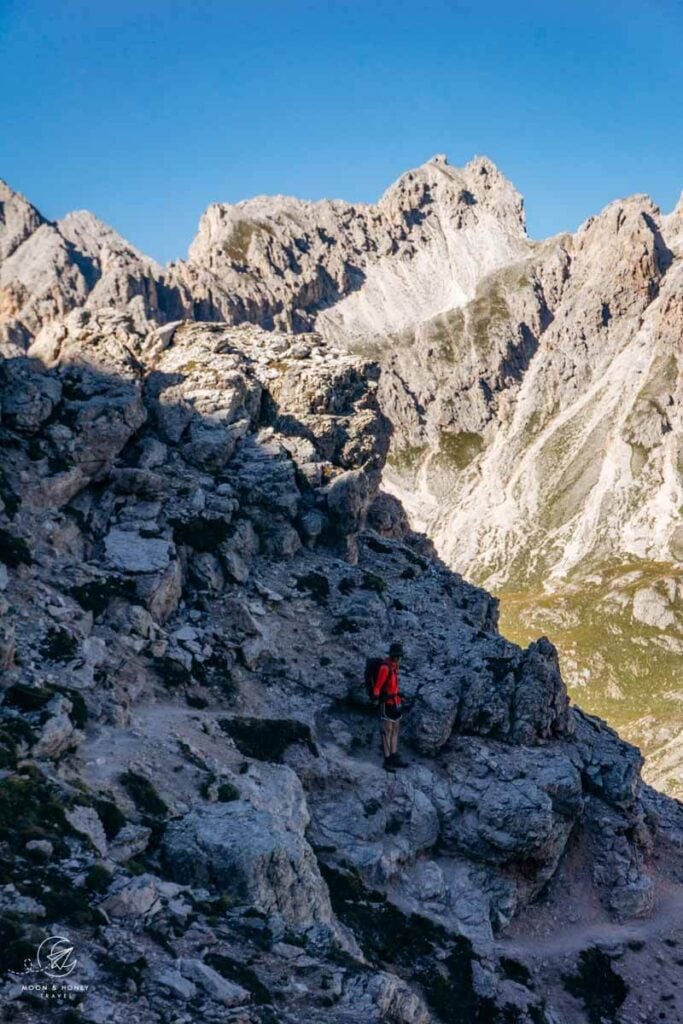
In early September, we hiked in shorts and t-shirts. In late September, we wore hiking pants, merino wool jackets, vests, and even puffers in the morning. When overnighting in the mountain huts in September, bring a down jacket and fleece-lined leggings.
Hiking Clothing
Hiking Pants
Base Layer: Quick-Dry, or Merino Hiking Shirts. We’re obsessed with these soft merino Arc’teryx lana crew neck shirts – Women’s / Arc’teryx lana crew neck shirts – Men’s.
Mid Layer: We never go on a hiking trip without this Columbia Women’s Powder Lite Vest
Mid Layer: Quick-Dry, or Merino Long Sleeve Zip Hoodie: I love this merino Icebreaker Quantum III Long-Sleeve Zip Jacket – Women’s / Icebreaker Quantum III Long-Sleeve Zip Jacket – Men’s
Outer Layer: Rain Jacket
Outer Layer: Puffer Jacket
Wool Hiking Socks: Smartwool womens Performance Hike Full Cushion Crew / Smartwool Men Performance Hike Full Cushion Crew
Beanie
Gloves
Sun Hat
Hiking Gear
Day Hiking Backpack: Osprey Tempest 30 Women’s Backpack / Osprey Talon 33 Men’s Backpack
Grade B/C high-cut hiking boots: Meindl Schuhe Island Lady (Kati’s Boots), Women’s Hanwag Tatra II GTX (Sabrina’s Boots), Men’s Hanwag Tatra II GTX (men’s equivalent)
CAT 4 Sunglasses: Julbo Shield Mountain Sunglasses
Hiking Poles: Black Diamond Trail Trekking Poles
Reusable Water Bottle: SIGG – Reusable Water Bottle – Shield ONE
Hiking Accessories
Climbing Gloves: Black Diamond Half Finger Gloves
Headlamp: Black Diamond Equipment Spot 350 Headlamp
Micro Spikes: CAMP USA Inc Chainsen Pro
Special Equipment
If you plan on hiking any secured hiking trails, pack a climbing helmet and climbing gloves.
Women’s Climbing Helmet: black diamond women’s climbing helmet
Men’s Climbing Helmet: black diamond men’s climbing helmet
Unisex Climbing Gloves: Black Diamond Crag Half-Finger Gloves
Dolomites Travel Guides
When to Visit:
- Best Time to Visit the Dolomites
- Dolomites in May
- Dolomites in August
- Dolomites in October
- Dolomites in November
- Dolomites in December
Where to Stay:

Pin this Image for Future Trip Planning!
Stay Connected:
Connect with us on Pinterest.
Follow us on Instagram.
Like us on Facebook.
Support Us:
If you love reading our content, send me a direct donation.


Hello. We plan to stay in Dolomites in the end of September for 8 days (22-30 Sept). We are family with kids (well trained for daily mountain hikes-did a lot of long hikes in French and Spanish Pyrenees). With a car. We would like to divide or stay between 2 places, not more.
What areas you will suggest to stay in this time of the year? We would like to go to nice hikes within 1-1.5 hour of drive.
Thank you
Hi Anna,
I recommend staying 4 nights in Val Gardena and the other 4 nights in Cortina d’Ampezzo.
Have a great trip,
Sabrina
Thank you!
And if we’ll stay 10-11 days in Dolomites, do you suggest to split them equally-5 days Cortina 5 days Val Gardena? Or it is better to stay in Val Gardena more days than in Cortina? Is it not too much for Dolomites in this time of the year?
Hi Ann,
10 days in September are great if you love to hike! I would divide equally. If I had 10-11 days, I personally would add in another base.
– Val Gardena
– Cortina d’Ampezzo
– Alta Pusteria (Braies, San Candido, Sexten).
When you’re in Cortina, you can focus on the Ampezzo Dolomites. And then you can head to Val Pusteria to hike in the northern Braies/Prags and northern Sexten Dolomites.
Kind Regards,
Sabrina
Hello. We plan to stay 5 days in the dolomites in the first week of september, but i am very indecisive about where to stay. What is, in your experience, the best place to stay having in consideration the hikes that it provides and the views? For example, if we stayed in Cortina could we easily hike or take a bus to Val di funes or Val Gardena?
Hi Alfonso,
It sounds like you’re traveling without a car, correct? If so, it will be easier if you base yourself in Val Gardena, or Alta Badia. The transit system in South Tyrol is easier to navigate. Depending on where you stay in Val Gardena/Alta Badia, you may be able to access trails directly from town. The trails around Cortina d’Ampezzo are excellent, but it’s easier to get around with a car.
Kindly,
Sabrina
You are amazing! I can not tell u how grateful I am for your Dolomites guide. So detailed! U have helped me create a fabulous itinerary for this coming September. From the bottom of my heart…thank u!!
You’re welcome Julie!! Thank you for reading.