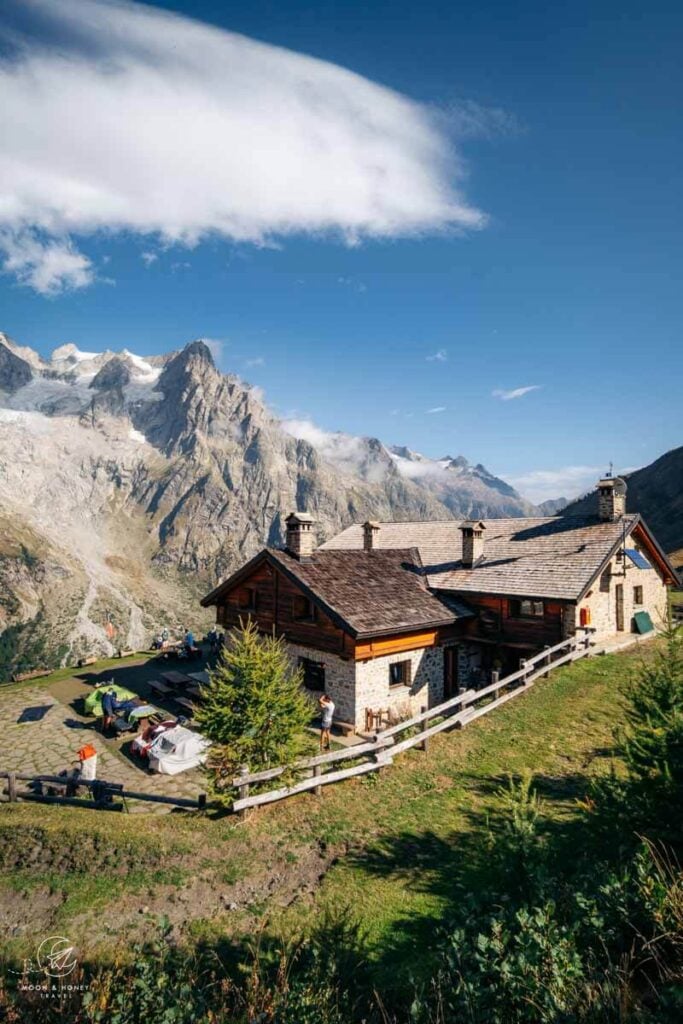
There comes a time in every hiker’s life when they find themselves choosing between the Alta Via 1 and the Tour du Mont Blanc, two of the most popular multi-day hikes in the Alps. The trails differ significantly in terms of terrain, accommodation options, scenery, and overall experience.
Having hiked both trails, I’ve outlined the key differences below so you can decide which trek is right for you. By the end of the guide, my partiality will be clear. And if neither sounds quite right, I invite you to read Best Treks in Europe.
- When to Hike: July, August, early-mid September
- When to Book: August – October the year before
- Packing List: Hut to hut packing list
- Solo Hiking: You can solo hike both trails. See Solo hiking the Alta Via 1
TMB vs AV1 Overview
| Alta Via 1 | Tour du Mont Blanc | |
| Countries | Italy | France, Italy, Switzerland |
| Distance | 120 km / 75 miles | 170 km / 105 miles |
| Type of Trail | point-to-point | circuit |
| Days Needed | 7-10 days | 10-11 Days |
| Terrain | Rugged | Smooth |
| Accommodation | Mountain Huts | Mountain Huts, Inns, Apartments, and Hotels |
| Wild Camping | Not permitted | Increasingly not permitted. Stay in official campgrounds with reservation |
| Booking | How to Book the Alta Via 1 Rifugios | How to Book the Tour du Mont Blanc |
Accommodation
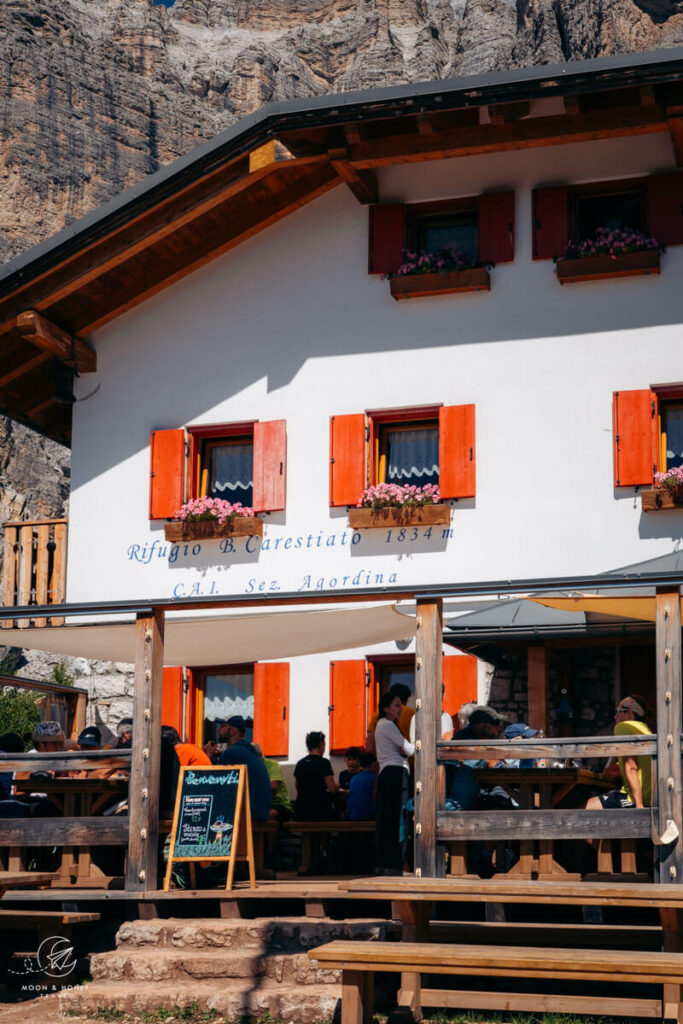

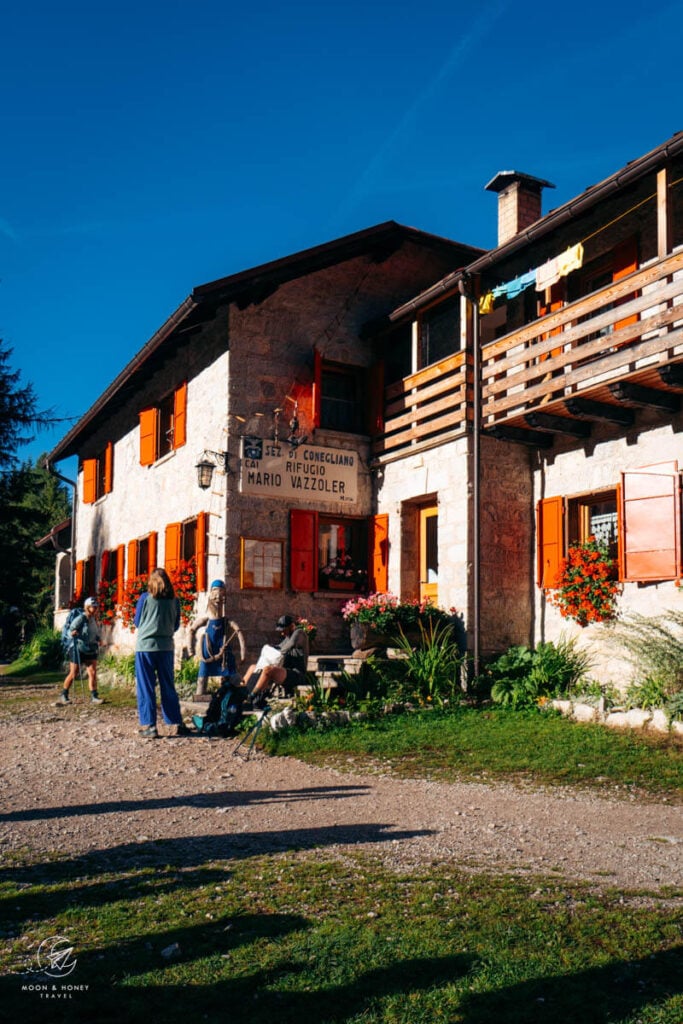
Along the Alta Via in the Dolomites, hikers stay exclusively in mountain huts (rifugi, Hütten). These staffed refuges provide warm meals, hot showers, WIFI (free or paid), and a mix of private rooms and dormitory-style accommodation.
The Alta Via 1 huts vary in terms of amenities and comfort, with the privately owned huts generally being more comfortable and lavish than the CAI (Club Alpino Italiano) owned huts. Regardless of where we stayed, however, the management was kind, the communal areas were cozy, and the atmosphere was convivial.
In contrast, hikers can choose from a variety of accommodations along the Tour du Mont Blanc, as the trail passes through several villages. When we hiked the TMB, we stayed in mountain huts, hotels, guesthouses, and apartments. It’s possible to plan a luxury TMB trek, staying exclusively in private rooms, or to plan an almost entirely hut-to-hut experience.
In short, the Alta Via 1 is a hut-to-hut hike, whereas for most people, the TMB is a multi-day trek with a wider range of accommodation options.
Difficulty

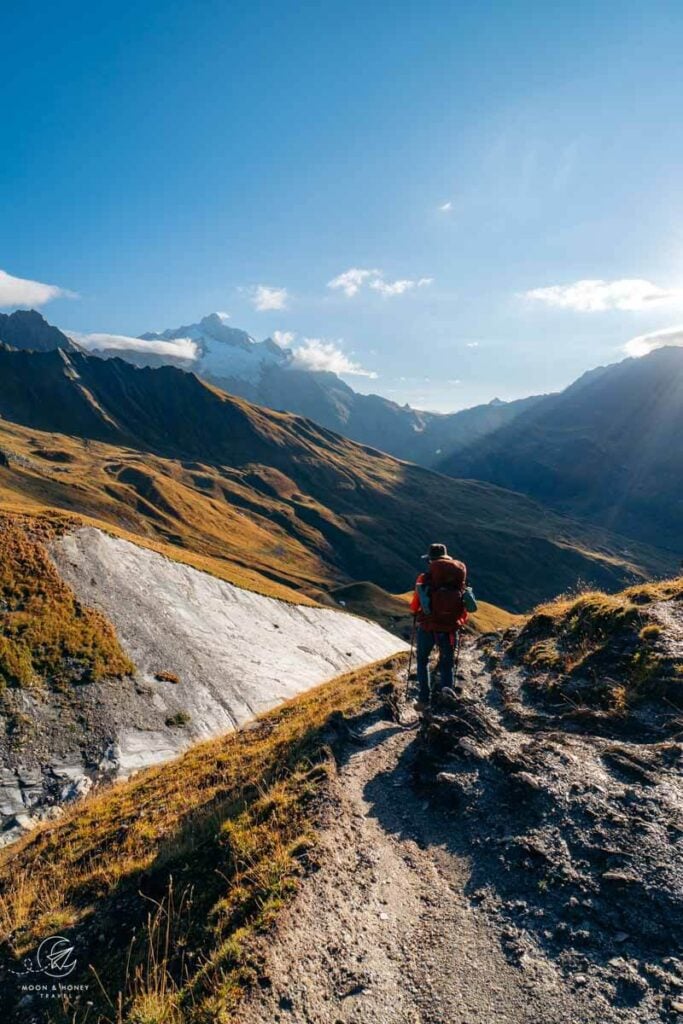
Difficulty is subjective, as every hiker has different strengths.
For me, the Tour du Mont Blanc was more difficult than the Alta Via 1 because of the longer stages and greater daily elevation gain and loss. However, when I speak with other hikers, they generally find the AV1 more difficult because of the terrain.
Terrain | From a purely technical perspective, the AV1 is more difficult than the TMB. Although the Alta Via 1 is the easiest of the Alta Vie high routes, it still traverses rugged Dolomite-limestone mountains characterized by uneven rock, scree, boulder fields, and even some karst pavement. There is also some light exposure along the AV1, particularly on the final stages. By comparison, the TMB follows mostly well-graded, smooth tracks. There are exceptions of course, including the ladder section, which can be bypassed.
Daily Distances | The average Alta Via 1 stage (12 km) is much shorter than the average TMB stage (17 km). Depending on your preference, you can opt for a faster-paced Alta Via 1 itinerary if you want to cover greater distances each day.
Daily Elevation Gain/Loss | The average TMB stage involves more than 1,000 meters of elevation gain and loss each day, whereas the AV1 rarely reaches the 1,000-meter mark when hiked over 10 days.
When comparing the Alta Via 1 and Tour du Mont Blanc to other high-alpine treks in Europe, say the Schladminger Tauern High Trail or Karwendel High Trail in Austria, Liechtenstein Panorama Trail in Liechtenstein, or the Alpstein High Trail in Switzerland, both the AV1 and TMB trails are significantly easier in terms of technical hiking.
Popularity & Trail Traffic
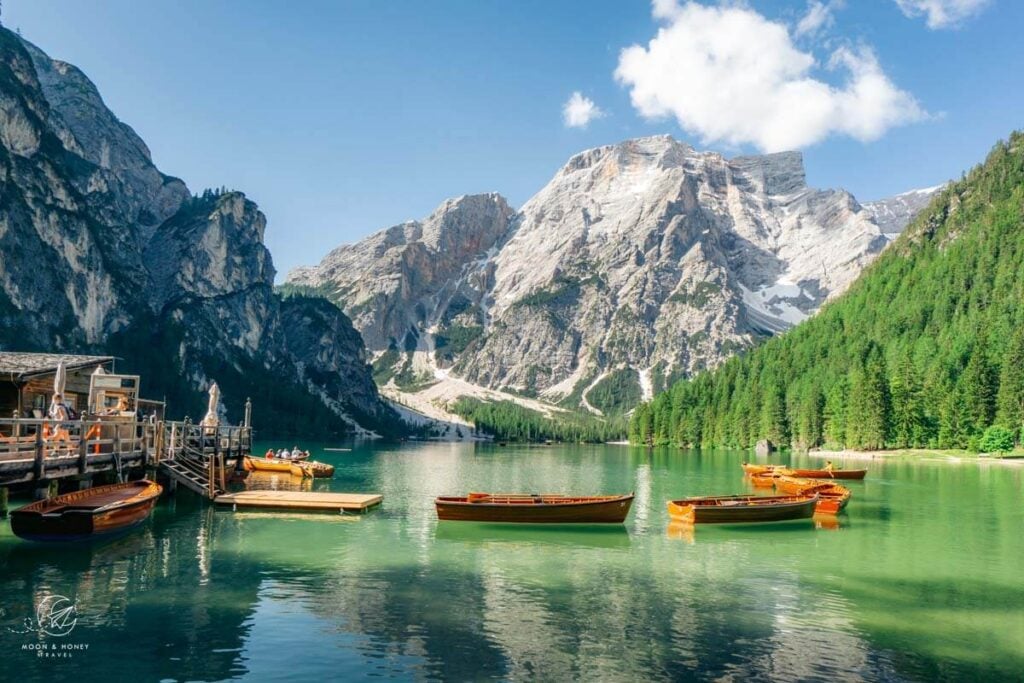
Luckily, the AV1’s limited trailside accommodation and lack of luggage transfers naturally limit the number of hikers on the trail.
Apart from a few hotspots that are easily accessible to day hikers, such as Lake Braies, Rifugio Lagazuoi, Cinque Torri, and Lake Coldai, the Alta Via 1 never feels overly crowded. The only section prone to bottleneck is the steep switchback descent from Forcella di Lago toward Lake Lagazuoi.
The northern stages are more popular than the southern stages, as many trekkers hike only the first 4-5 stages from Lake Braies to Cortina d’Ampezzo. The further south you go, the quieter the trail becomes. Here’s how the AV1 Northern and Southern stages differ.
The Tour du Mont Blanc is overcrowded for several reasons, including wild camping (legal and illegal), abundant accommodation, taxi shortcuts, and luggage transfers.
There were many times on the TMB when I felt frustrated by the trail traffic. Kati and I even sought out alternative routes (Stage 3: Signal – Col du Bonhomme and Stage 7: Gite Alpage de la Peule – La Fouly) to avoid walking with so many people.
In July 2026, Jean-Marc Peillex, president of the Pays du Mont-Blanc community of communes and mayor of Saint-Gervais, announced plans to regulate the TMB beginning in 2027. He estimates that annual use has increased from roughly 40,000 hikers five or six years ago to around 78,000 today.
The proposed measures include mandatory reservations for bivouac areas and tighter regulation of luggage transfers. Peillex has also criticized the use of taxis to skip sections of the route and the transportation of large suitcases from hut to hut, arguing that these practices undermine the traditional spirit of the trek.
The proposals are not yet established regulations, but they highlight the growing challenges of managing the TMB’s popularity.
Scenery
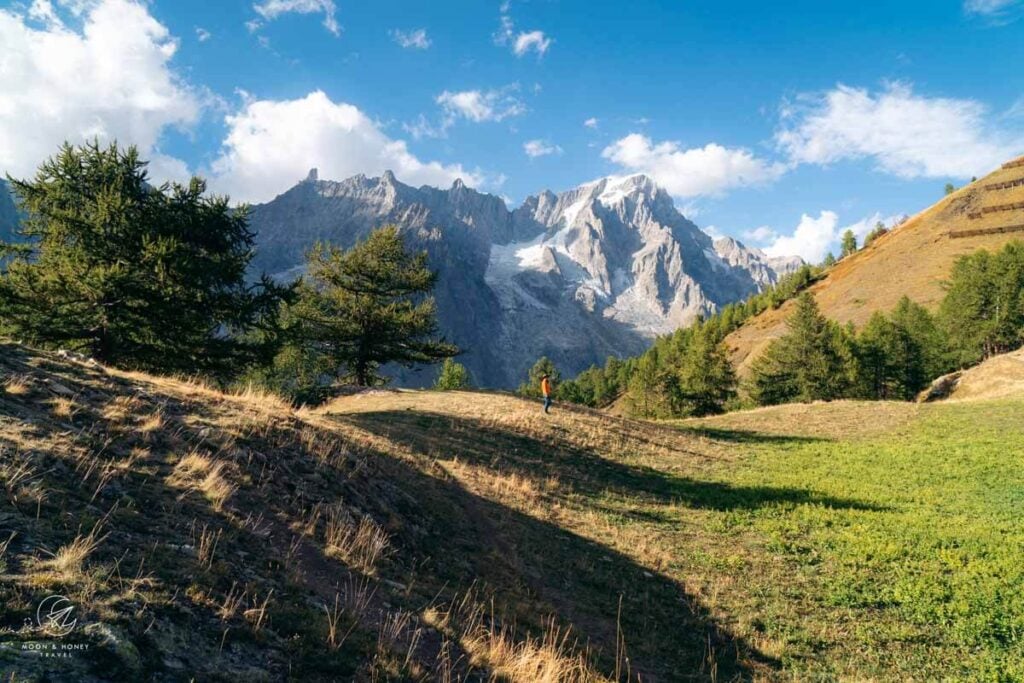
Both trails offer spectacular alpine scenery, but the landscapes are distinctly different.
The Alta Via 1 is more rugged and theatrical, with towering pinnacles, cliffs, and rock walls dominating the landscape. It feels like a more immersive mountain experience, with the trail often traversing directly beneath sheer vertical walls and across rocky terrain.
The TMB offers greater variety and more expansive views, including distant views of glaciers. Rising and falling widely around the Mont Blanc massif, largely on well-groomed paths and through villages, it feels like a grand alpine walking experience rather than rigorous high-alpine hike.
Experience

Both trails are social. Hikers are excited to chat, compare experiences, and share stories from the trail. Both also attract plenty of North American hikers, so it’s easy to strike up conversations in English.
One significant difference is how the two treks end. The Alta Via 1 finishes at the La Pissa bus stop near Belluno, on a busy road. After days of dramatic mountain scenery, the ending feels anticlimactic and almost jarring. Many hikers also take alternative exit routes before reaching the official endpoint, so by the time you finish, much of the hiking crowd has already dispersed.
In contrast, the Tour du Mont Blanc finishes in Chamonix or Les Houches, with easy bus and train connections to Chamonix. Ending in a lively alpine town after a long, challenging trek feels far more satisfying.
Hiking Season

The hut-to-hut hiking season in the Alps runs from late June/early July until early-mid September.
The Alta Via 1 hiking season is slightly longer than that of the Tour du Mont Blanc, because the AV1 Rifugios close around September 20th (earliest) whereas the TMB Huts close around September 13th.
I recommend booking these treks between July and early September.
Booking
For both the Alta Via 1 and Tour du Mont Blanc, you can choose to book your trek independently, self-guided through a hiking company, or as a guided trek. I recommend booking as early as August of the previous year. See:
If you have limited time or are starting the planning process late, I recommend saving yourself a whole lot of hassle and booking with a self-guided hiking company.
For the Tour du Mont Blanc, I recommend booking with Adventure Base, a Chamonix-based hiking company that is particularly well equipped to support TMB trekkers. Adventure Base is offering a special upgrade just for our readers. Book any of their self-guided or guided treks and claim your perk by filling out this inquiry form or using the code MOONANDHONEY at checkout.
For the Alta Via 1, you can either book with Adventure Base or Alpentures UNGUIDED. While Adventure Base offers a better trail navigation app and overall support, Alpenventures UNGUIDED is more specialized in the Dolomites. They can often secure late bookings, when other companies cannot and approach itineraries with greater creativity. Alpenventures also offers numerous hikes in the Dolomites in addition to the Alta Via 1, including Alta Via 2 Hiker’s Route, Best of the Dolomites Trek, and Alta Via 8.

Final Thoughts
Personally, I’m partial to the Alta Via 1, because its quieter and feels more authentic. The Tour du Mont Blanc has become increasingly crowded due to its accessibility. We hope that Jean-Marc Peillex’s efforts to regulate traffic on the TMB will be successful.
More Trekking Guides
Alta Via 1:
Tour du Mont Blanc:
- Tour du Mont Blanc hike
- Stage 1: The Brévent – Les Houches
- Stage 2: Les Houches – Les Contamines-Montjoie
- Stage 3: Les Contamines-Montjoie – Refuge de la Croix Du Bonhomme
- Stage 4: Refuge de la Croix Du Bonhomme – Cabane du Combal
- Stage 5: Stage 5: Cabane du Combal – Rifugio Bretone
- Stage 6: Rifugio Bretone – Gite Alpage de la Peule
- Stage 7:Gite Alpage de la Peule – Champex-Lac
- Stage 8: Champex-Lac – Fenêtre d’Arpette – Trient
- Stage 9: Trient – Tre le Champ
- Stage 10: Tre le Champ – Chamonix
More Treks in Europe:

Pin this Image for Future Trip Planning!
Stay Connected:
Connect with us on Pinterest.
Follow us on Instagram.
Like us on Facebook.
Support Us:
If you love reading my content, you can send me a direct donation.